Kimmitt Genealogical Research

11 May 2012

Sensible of His Own Vileness: The Battle for Isaac Stone's Immortal Soul

[continued from Isaac Stone of Shrewsbury, Mass., posted 10 May 2012]


When we left Isaac, he was recounting a visit to the deathbed of his grandfather, Isaac Stone. He quotes his own diary entry written nearly forty years earlier (22 April 1766) describing his feelings. At that time, Isaac Jr. was 18 years old and training for the ministry, and  like his grandfather, very concerned with the theological ramifications of death. He describes his grandfather's journey as he prepares to meet his maker. 

In the past I would have glossed over this bit, but the History of Shrewsbury, Mass., by Andrew Ward goes into excruciating detail on the battles fought over theological ideology and it seems that Isaac Sr. was well immersed in them. In particular, he was a staunch proponent of original sin! In 1750 the church appointed a committee to "discourse" with Dr. Joshua Smith and Isaac Stone on the controversy. "Isaac Stone [had] complained to the brethren, that one of them was defective in a fundamental article... The ground of controversy was doctrinal. It related to original sin. Mr. Stone contending for, and Dr. Smith against the doctrine."This was under the leadership of the first minister of the First Congregational Church in Shrewsbury, Job Cushing. 

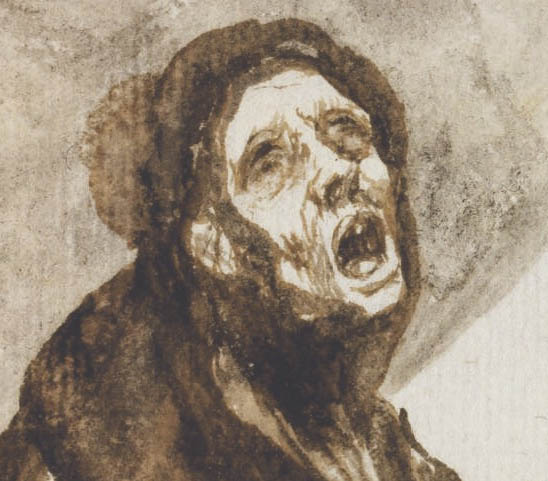
Having served as the church historian at this very same church, I'm accustomed to reading exceedingly dry accounts of these discussions, whether taken in minutes of meetings or minister's records. You can tell that those involved felt very deeply about the issues, but still it comes across as lofty academic discussion. By reading Isaac's letter, on the other hand, you get a much more personal account, and see the implications of belief in certain doctrines. This poor man felt he had to spend his life atoning for original sin and spent his days weeping and gnashing his teeth. What a depressing existence he must have had!


2 [cont.]

                                ...He expressed
very comfortable hopes, that his sins
were pardoned;  that the consolati-
ons of God had abounded to him, more,
than in all his life before, in his time
of general calamity. Notwithstanding
the thought of Death seemed to lie with
weight on his mind." His countenance
was most solemn! Astonishing Solemn-
ity in his face + expressions, painted the
deep impressions made upon his
mind, by death, judgment + eternity.
in near view: Sensible of his own vile-
ness, by reason of original total de-
pravity + propensity to sin, he spent
much of hs time alone in his cham-
ber, many years before his death:
that he might mourn [for sin] + humble
himself: renouncing with abhorrence,
vile selfish feelings; striving to come near
to his dearest Saviour; renewably, + con-
tinually, devoting himself wholly to Christ;
he depended upon Him alone for rich-
teousness: + cryed earnestly. for the influen-
ces of Divine Grace upon his Soul: he re-
garded God above many; + poured out
Strong desires of his mind in prayer for


p. 3
the Strengthening of the church of
CHRIST; The advancing of the cause
of GOD: His native country Lay near
his heart: he longed for the Salvation of
[fellowday?], in all the world. His tempe-
rance was persevering. Years before his
death signs of a cancer appeared in his
face; he avoided cider, + whatever might
inflame: and it never increased. His com
plexion was dark, his eyes blue, his stature
a middle five; his features + deportment
quite agreeable: he retained his teeth + other
marks of a man of fewer years...

Note: Isaac used ampersands all over the place. But because the ampersand is an escape character in html, it appears as & when I type it here. I have therefore decide to replace all ampersands with a plus sign (+) instead.

10 May 2012

Isaac Stone of Shrewsbury and Douglas, Mass.

I don't choose my friends by how many historical documents with genealogical value they own. I just got lucky. Occasionally my pal Harry brings along a treasure for me to admire. It makes me feel like I did as a kid when my father would bring home a little trinket. Only what Harry has is immensely valuable to historians and genealogists alike.

A couple of weeks ago he appeared bearing a mylar pocket with a small yellowed letter in it. I only had to read a few words before I knew I'd need to transcribe the entire ten pages. The words of a man about my age, born a little more than 200 years before me, all about his life and family. He wrote it about a month before he was discharged from his position as a minister in the town of Douglas, Massachusetts.

I snapped photos of it on my kitchen table with my iPhone, at night, so the images aren't great. I can always go back and recapture them, but I want to share some of it with you here before I bust a gusset. It will have to be in installments, though, because it is so long. I have Harry's permission to publish this.


Letter in possession of private collector.
Written by Isaac Stone, 5 September 1805, Douglas, Mass.
Transcribed by Polly Kimmitt, 1 May 2012, 10 pp


p. 1
                            Douglas, Sept. 5, 1805

I, Isaac Stone was born March 17. 1748:
at Shrewsbury. My Father, Jonas Stone,
was born at Framingham, Massachusetts,
August 23, 1725* My Grandfather, Isaac
[footnote in right margin reads *died March 27. 1809]            
Stone was born at Framingham, Sept.
3. 1697. O. S. Died just before midnight,
April 22. 1776. N. S. In his 79th year. He
much encouraged me in my fitting for
College, at College, + since, in the gospel
ministry, as long as he lived. I received
many letters +; pious instructions from
him. He had 300 acres of excellent land
in Shrewsbury, new, when he first pos-
sessed it. Lived many years upon it, and
died there. He was an ingenious pen-
man and draughtsman_ he was town-
clerk _ he was accurate in his writings;
his labours were well accepted in church
+ town. When his deathbed sickness began,
he thought he should not recover. In my
Diary I wrote: "April 22. 1776. Last week
I visited my Grandfather, whose name
I bear, – was much affected at seeing
him sick, to appearance on the verge
of eternity! He desired me to remem-
ber him to Mr. Hall of Sutton, + to de
sire his prayers, that he might have
a safe + easy passage through the valley
p. 2
of the Shadow of Death, +that he might enter
into the haven of eternal rest... [much religious
verbiage follows].

Title page of Webster's 
Dictionary of the English Language,
 circa 1830–1840
The first thing that strikes me is that his spelling is virtually the same as that we use today. I've seen works by well educated men but there's always something that gives away the fact that spelling had not settled down into anything standard. This man was spelling words the way we spell them today, and it was 23 years before Noah Webster first published his Dictionary of the English Language in 1828. Of course that was when the difference in spelling between British and American English was really standardized, thus we find Stone spelling labours rather than labors. 

A brief entry in Andrew Ward's History of the Town of Shrewsbury, Massachusetts (Boston: Samuel G. Drake 1847), 425, states "Stone, Rev. Isaac (s. of Jonas) grad. H. U. 1770; ord. minister of Douglass, Oct. 31, 1771; married Susanna, D. of Benjamin Goddard, Oct. 27, 1773; dis. from his pastoral charge Oct. 28, 1805, and d. in 1837, aged 89."

H. U., as you may know, refers to Harvard University. And well yes, that's what Harvard did: it trained ministers and educated them extremely well. Still, I'm surprised by his consistency in spelling, the neatness of his writing, and his syntax. Can't help it. And I find it appropriate that he mentions his grandfather being "an ingenious penman and draughtsman" and notes that "he was accurate in his writings." The apple don't fall far from the tree!

I compared some of his date notations to the Vital Records of Shrewsbury, Massachusetts, to the end of the year 1849 (Worcester, Massachusetts: Franklin P. Rice, 1904). There, on p. 99, his birth appears as "Stone, Isaac, s. Jonas and Rachel, March 6, 1747-8." OK, pretty close. (We'll see later that he gives us his mother's maiden name as Rachel Rice). The History of Shrewsbury also gives his birth as March 6, 1748, corroborating the date in the published vital records. So I just wonder which date is correct. The dates for his father and grandfather's deaths agree in Isaac's letter and Shrewsbury VRs. 

The first page was enough to draw me in, and I continued to transcribe through his description of his grandfather's religious convictions, which I will present in the next installment.


*I have been obliged to substitute a + for an ampersand because of the limitations of html. If I can figure out a way around this, I will fix it.http://pk-pollyblog.blogspot.com/2012/05/sensible-of-his-own-vileness-battle-for.html

01 April 2012

1940 US Census Project Update:
Release of Images Tomorrow!


Here are some excerpts from a notice from the 1940 census project. Please note that it won't ALL be ready to index by tomorrow! I sort of wish they had warned us earlier. In fact, by 10pm on the first day, only five rather sparsely populated states will be ready to index.

Get Ready, Get Set . . .

What You Can Expect on April 2

The 1940 US Census Community Project is creating an index to the 1940 US Federal Census that will be made available for free. This is a joint effort between Archives, FindMyPast, FamilySearch, hundreds of societies, and tens of thousands of individual volunteers. The resulting index will be made available on the websites of the primary sponsors.

On the morning of Monday, April 2, NARA will release the digital images of the 1940 census to multiple parties, including the 1940 US Census Community Project. We will immediately start uploading these 3.6 million images to servers, where they will become available online over time. The ability for people to start accessing some of these images through the community project will take hours, not minutes.

As the first five states are loaded to servers, corresponding projects will be set up to index those images as state projects. We anticipate the first five states will be available for volunteer indexing by 10pm EDT.

The first five states to be loaded and ready for indexing on April 2 are the following:
Delaware
Virginia
Kansas
Oregon
Colorado

The process of uploading images and setting up indexing projects by state will continue until all of the states and territories for this project are published, which may take up to two weeks to complete. Every day more images will be made available for browsing and indexing, so you will want to check back often to see which states are available.

The indexing process will be taking place through FamilySearch indexing. If you are already a FamilySearch indexing volunteer, these 1940 census projects will appear as new projects in the indexing software. No new software download or registration process is necessary to participate. If you are not currently a volunteer but want to participate in this historic opportunity, get started by downloading the indexing software and registering today.


What You Can Do Now
Download and install the indexing software
Watch an Overview | Get Started
Learn how to index the 1940 US Census
Watch a Video | Try the 1940 Census indexing simulation
Let others know about the 1940 US Census Community Project
Like the Facebook page | Follow @The1940Census on Twitter | Follow the page on Google+ | Tell friends about the1940census.comYou can keep up with the latest updates by visiting the1940census.com often over the next few weeks.

Thank You!
The 1940 US Census Community Project Team


25 February 2012

Where Were My Soldiers in 1940?

The release date for the 1940 US census is so close you can feel it! On April 2nd, 2012, the National Archives and Records Administration (NARA) will provide images of 1940 census online. There will be no charge to access these images; however, there will also be no index! At least not right away. And that's where you and I come in.

The 1940 US Census Community project, a joint initiative between Archives.com, FamilySearch, findmypast.com, and other leading genealogy organizations, will coordinate efforts to provide quick access to these digital images and immediately start indexing these records to make them searchable online with free and open access.

Personally, I can't wait. As a case worker subcontracted to the US Army to find the families of servicemen lost in previous conflicts, I usually juggle anywhere from 8-15 cases at a time. Since most of my cases are from the Korean and Second World Wars, I usually find myself longing for information on the family unit in 1940. That alone would be enough to keep me happy, but what is going to go a long way in helping me solve my cases more quickly is that little question "Where were you living on January 1st, 1935?" It's beautiful! In an era of closed vital records, threats to the Social Security Administration's Death Master File and other restrictions on access to public records, it is a relief to be able to get any information on families. I just know my productivity will rise as a result!

We still have to find a way to get these images indexed, though, and that is where the 1940 US Census Community Project comes in. Whether as an individual or on behalf of your favorite genealogical society, you can volunteer to index these images. I signed up at RootsTech last month. It's a great project for your society and there are full instructions on how to organize this great service project on the 1940 US Census Community Project webpage. Take a look to see how you can help. It's actually quite fun to index. You download indexing software and they provide a small batch of records to you. When you complete one batch, they send the next. As I understand it, we will be able to choose which state to index, but not individual towns and cities.

I'm greatly looking forward to this and I hope every genealogist takes a few hours to index some of the 1940 US census. Projections are that it could take six months to complete, but if we really step up our involvement it could be significantly less than that.


06 February 2012

Why You Care About MGC, SSDI, the DMF and RPAC

Deciphering the Acronyms
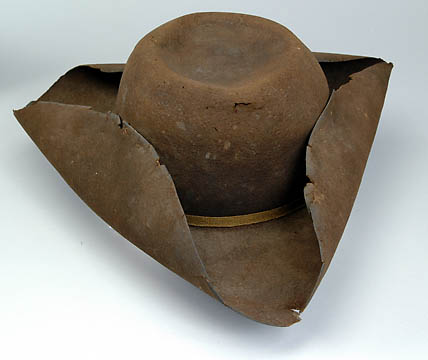
Official hat of the MGC: Minuteman Tricorn hat
Image courtesy of National Park Service
You may have already decided that you don't need to care about this alphabet soup of terms because you don't know what they stand for. Well here's a brief explanation of why you actually do care very much. Today I'm donning my hat as president of Massachusetts Genealogical Council (MGC). MGC is an umbrella organization with both individual and organizational members interested in genealogical and historical research in Massachusetts, and who care about access to public records. MGC monitors legislation, both in Massachusetts and nationally, to ensure that our public records remain accessible. So now I'm very tuned in to legislation, public records access and acronyms of all kinds. It's not anywhere near as fun as doing genealogical research, but it is necessary work.

Image courtesy of the
United States Social Security Administration
SSDI stands for Social Security Death Index, the commercial term for the Social Security Administration (SSA) Death Master File (DMF). The DMF is a list of social security numbers of people now deceased and whose numbers may not be used by anyone ever again. The Death Master File was created at the behest of the SSA to stop identify fraud. And when used properly, it does just that. It is considered a public document under the Freedom of Information Act, and is sold only by the National Technical Information Service (NTIS) of the U.S. Department of Commerce to commercial entities like Ancestry.com.

The Arguments Against Open Access
There are two main objections to the DMF remaining public. The first is the illegal use of the SSNs of deceased children to claim deductions on income tax returns--eighteen cases of this last year. I don't want to start throwing numbers around, but we all surely realize that 18 out of 300+ million American citizens is a very, very low percentage. What the criminals are doing is reprehensible, but does not warrant removing this important tool from our hands, especially since there is a much better way to control it.

The only time the DMF does not stop fraud is when it is not used. Certain governmental agencies, the IRS in particular, do not consult it. If the IRS did actually examine the DMF, the problem of criminals using the SSNs of deceased children to claim tax deductions would not exist. The DMF is, in fact, the only control we have against criminal use of SSNs.

So there is legislation afoot to close public access to the DMF. But since the problem we have with identity fraud is actually helped by consulting it, taking it away isn't going to help. That's like making public a list of convicted sexual predicators, and then taking it away because not everyone consulted it and someone was victimized.

The other reason given for closing the DMF is that sometimes the SSA goofs and enters the number of a living person into the Death Master File. When this happens, everything stops for that poor individual: no benefits, no driver's license, no identity. We've all heard the "I'm sorry, Ma'am, but you're dead," stories, and they are horrifying. It takes these unfortunate people years to regain their identities. But this is a result of a lack of quality control within the SSA that has nothing to do with public access. How does eliminating our access to the DMF stop this problem? It doesn't. It just means that we can't discover what the problem is on our own. It creates a curtain between us and records about ourselves that should not exist.

Some say the government could grant access to the DMF to other governmental entities that need it, but the government is not the only institution that needs to consult it. Financial institutions, hospitals, universities, funeral directors, credit agencies, attorneys and yes, genealogists all use the DMF on a daily basis. Who will decide which of these deserves access?

Most casual genealogists are researching far into the past and do not need the social security entries for anything other than establishing correct identity before moving backwards in time. As vital records in more and more states get restricted, the SSDI becomes an ever more important tool to beginning a genealogical search. Professionals work as heir-searchers, helping to settle estates, and clear titles and testifying as expert witnesses in court cases. Others work on repatriation cases for the US military. The recovered remains of previously unaccounted-for servicemen need to be identified via DNA obtainable only through proven family members. And primary next of kin is determined via kinship determination researched by genealogists. I know in my job as a case worker in repatriation cases I use the SSDI every day, over and over again. Without it I will become much less efficient at what I do. I work under contract for the US Army, and as such am paid by them, albeit indirectly. Will the government grant me access to the SSDI? I highly doubt it.

How You Can Help
If this were all about me, I probably wouldn't care. I'd just take a lot longer to research each case, make more money and forget about it. But it isn't about me. It's about keeping our government transparent, efficient and sensible. The taxpayers are paying me, and I don't want to waste their money.

We all need to get to know our congressmen and women and let them know that genealogy stimulates business, brings patrons into libraries and archives, generates millions of tourist dollars, and is an important field to a nation composed largely of immigrants. Without open access to public records we cannot research our past. I'm hoping genealogists at all levels will get involved.

Follow RPAC, the Records Preservation and Access Committee, a joint committee with representatives from the Federation of Genealogical Societies (FGS), the National Genealogical Society (NGS), and the International Association of Jewish Genealogical Societies (IAJGS). RPAC's legal team works behind the scenes with politicians and legislators to help ensure that access to public records remains open. They are looking for some state liaisons in order to be able to reach out and educate genealogists across the country on issues of public access. Is your state one of them?  I recommend that you subscribe to the RPAC blog's RSS feed, or go to the homepage of MGC where we have the latest RPAC blog posts, as well as our own brand new blog which will be appearing very soon.

Another place where genealogists are gathering around this cause is the Occupy Genealogy group on Facebook. A young but enthusiastic group, it is still relatively unstructured but has lots of members who are passionate about this issue. I am hoping they follow the lead of RPAC and get organized behind a single, calm voice so that we can be taken seriously. We want to come across as informed and serious.

Now is the time for action. Follow RPAC, Occupy Genealogy and MGC. Get to get to know your members of Congress so that you already have a relationship with them before you call them to register your concern with particular bills. Let them know you are a constituent and that you are passionate about this issue. Tell them your concerns. We all want to prevent identity fraud, but in a way that remains true to American democracy. Let's keep these records open for ourselves and our descendants!

World War II Memorial in Washington, DC


23 January 2012

Caps for Sale - the State of My Life

Courtesy of http://books.google.com
Someone on my Facebook page asked how many hats I currently wear. Quite a few, as it turns out. Here on my blog I write about things readers might find interesting. To me, my own activities don't fall into that category, but I've had a few people chastise me about that, so here it is.

There is a lot of negative buzz in the genealogical community lately about people overselling themselves, and I certainly don't want to come across that way because in reality I don't think anything I'm doing is all that spectacular. I myself am happy with it, but I'm not out to impress anyone. Then again, it seems kind of dumb that you can read my blog and have no idea what I'm doing. I always say that if you carry modesty too far it becomes an egotistical thing. A person who purposefully does not share anything about him/herself can seem closed-off, and for what purpose?

Courtesy of http://www.networkoffood.com/pies
So, yes, I've got my finger in countless pies these days. It goes in cycles. I take on lots of projects, work really hard for two-three years, nearly burn out, then take a year off to recover. Right now I'm in a heavy work phase and will be for another two years. I have already decided that from then on I will only accept one major volunteer position at a time. Remind me at the end of 2013 somebody!

Love
Being a wife and mother is my favorite thing in the whole world. With two kids in college and one in high school the responsibilities have eased up over the years, but I always put family first.* Home is where I relax, feel centered and can gaze lovingly at my sons and husband when not yelling at them about socks in the middle of the room or toilet seats in the wrong position. My boys are what sustain me. And my friends brighten my days and I am blessed to have so many that I love.

Courtesy www.dtic.mil/dpmo
Job
I work for the American History Company, under contract with the US Army, and have posted about this before. This takes up the bulk of my working time. It is extremely rewarding and my co-workers are the best! I wake up in the morning and start thinking about the cases I'm working on and next thing you know I'm at the computer. Whoosh! Not bad for someone who has trouble getting started in the morning.  I also take on various genealogical research projects, most of which are Massachusetts immigration/emigration jobs.

Volunteering
It may be voluntary for some people, but I feel obliged to give back to a very generous and nurturing genealogical community that welcomed me when I was a n00Bish genealogist. I count myself among the most fortunate people on the planet, having a big warm house, the aforementioned well beloved family, a job I adore, fuzzy cat, dear friends, and several ongoing knitting projects beckoning. Most people on this earth don't know where their next meal is coming from. I never forget about those people. Millions of them, all over the place, suffering in ways I can't even imagine. Is it guilt that makes me volunteer then? Or is it a way to return some of my good fortune to the universe? I don't know. I just know I feel compelled to give my time in some way that benefits others.

That's how I got talked into accepting the position of president of the Massachusetts Genealogical Society (MGC). I have a most spectacular executive board who greatly assist me in the work MGC is trying accomplish--educating the public about legislation that threatens to limit the access to public records. We put on an annual genealogy seminar each year and this year promises to be the best yet.

I've also been working for the Federation of Genealogical Societies (FGS) for a year or so, and as of January 1st joined the FGS Board of Directors. Being on the board means added responsibilities, so I'm also the head of the Nominating Committee, on the Conference Planning Committee and editor of the FGS Voice Newsletter. I just published the first issue in the new format yesterday and am hoping subsequent issues won't have so many, umm, issues, as this first one did.

Lest I not neglect the New England Chapter of APG, I should mention that I am currently in charge of publicity for them. I should not be doing this, don't do it well, and am looking for someone else to take it over. Anyone?

Speaking Engagements
I reluctantly accept offers to speak, and have done so a few times in the past few months. I've been a guest on GeneaBloggers Radio on Veteran's Day talking about my military research, and on FGS Radio-MySociety on January 7th, about transitioning new boards with grace and aplomb. I hate listening to myself since it appears that the only word I've ever fully mastered was "ahhh," but I also like to push myself to do things that make me feel uncomfortable, and that definitely qualifies. I also gave what might have been a fine PowerPoint presentation to the Shrewsbury Women's Club, but the projector experienced technical difficulties, so I ended up just talking and gesticulating grandly for a very bored audience! Remind me to tell you about the lady who was stalked by a genealogist that wanted to harvest one of her kidneys.

Publications
I've had a couple of articles printed about me: one in the Worcester Telegram and Gazette and the other in the APG Quarterly, but as for publishing something myself, I still haven't managed it. I've got a little piece I'm going to submit to the Massachusetts Society of Genealogists 2012 Writing Competition that I hope will get published, even if it doesn't win. Some day I'm hoping to actually write up my own family instead of only shoving things into folders and updating the genealogy database. Well, there is this blog, of course. I guess that counts as a publication.

Transferware Collectors Club Seminar
Baltimore, MD, October 2011
Fun Things
Lest I give the impression that I never have fun, I should mention that I belong to a very good community chorus. I also adore knitting, being particularly excited about the colors and textures of the yarn, not so much about the finished garment. I try to do things that are good for me, so I have an appointment to walk with a friend every Mon-Weds/Fri, and go to the gym on Tues/Thurs/Sat. I enjoy kayaking immensely. And so I can play dress-up without bankrupting the household I also sell Mary Kay products. I play word games on my iPhone, do crossword puzzles, love to travel, and am intending to create scrapbooks for all three sons one fine day (before they have kids of their own). I also collect blue and white Staffordshire pottery and go to a yearly Transferware Collectors Club conference with my dear sister. Part or all of the family goes on an annual week-long camping trip in New Hampshire where we meet up with old friends and enjoy the simple life. I love to take family vacations in exotic locations. See? I have fun!

Things I Don't Do Anymore
Re-Dedication of the Col. Timothy Bigelow Monument
Worcester Common, Massachusetts, May, 2008
I did not renew my commission as a Notary Public. I no longer walk 30 miles a week. I won't train for an Avon Walk for Breast Cancer again because it ruined my feet. I don't sew any more. I have a hard time reading non-genealogical books because my time is stretched too thin. I don't have many dinner parties. I haven't cross-country skied in two years. I've given up on home decorating until the last son is out of the house. In fact, the housework, in general, has slid a bit. I haven't done a thing with the DAR since my "reign" as regent of the Worcester chapter ended. I don't sing in the church choir, nor do I make it to church very often. I'm no longer the Church Historian or on the Church Council. I am no longer on any school councils or committees. I do not currently volunteer for APG. My garden is sadly neglected, to our neighbors' chagrin.

Priorities
When you have this much on your plate, you have to constantly try and trim it down. You end up drilling down to the essence of everything you do. If you aren't careful it can be to the detriment of relationships and productivity. You notice the first subheading I listed was Love. You could take all of the other subheadings combined and they wouldn't equal that one. Love is the meaning of life. If anything were to threaten that, I would readily eliminate something else to compensate. I'm so lucky to also love my work, and those that I work with. I'm one lucky lady, that's for sure.

Feedback
Do you think this post is boastful, arrogant or publicity-based? Does it seem self-serving? I'm curious what people think about this one because it is different from my others. Let me know your thoughts!

* Except the time I went cross-country skiing with Jude and left 12-year old Nathan at home sleeping feverishly. God forgive me!

With my boys at the top of Mt. Washington, during a camping trip in 2003.


16 January 2012

Open-Mindedness and Compromise Not Dirty Words

Author's children, learning to compromise.

Play Nice!
It's not just true in politics: you see it everywhere you turn. It's a cultural thing. It even rears its ugly head in the genealogy world. It is not fashionable to be tolerant and patient. Somehow people have decided that they must not listen to anyone with a different view, and in fact, must condemn them. Is it for fear of weakening their own opinions? If so, it means that their view is founded on emotion, not facts. I've got nothing against emotion. But first I want to make sure that what I'm getting whooped up about is actually true. Only then can I truly express indignation. Nothing burns me up more than watching someone rant about something that is true only in the ranter's own mind. What a waste of energy. I think fear causes most of this, and fear can be alleviated through gathering more information about an issue.

Some people think they are being objective because they do seek others' opinions. They talk to people (their friends), watch the news (on one channel) or check things out on the web, usually starting with a Google search. It was recently reported in the news that Google searches don't return purely objective results. Google is learning about you by how you act online, what sites you visit, what you search for. So Google brings you what IT thinks you would like to see. This makes it tougher to seek out other points of view. Just as I get my news from multiple sources, including but not limited to various media outlets, so would I like to have a completely unbiased-in-my favor search result. I'm looking for truth, not stroking of my ego. Add to that the fact that Google has their own reasons for skewing the results, based on advertising dollars, and you have a cloudy vision of reality.

So what, you may rightly ask, does this have to do with genealogy? Open-mindedness and compromise are what lead us to continue learning even when we think we know it all, as many seem to these days. In particular, I'm thinking of genealogical societies. There is a crisis in genealogical circles today: a massive clash of the old and new style genealogist. Two vastly different demographic groups are intersecting after years of remaining isolated from one other, and creating what appears to be a rift.

We Can Fix This!
Many societies were founded in the 1980s, before computers, before the internet, when genealogy was unknown to most people. They were a great place to gather with like-minded souls, laugh about loving cemeteries and go on research trips together. The pace of research, and life in general, was exponentially slower. Most societies' members were limited to those able to travel to a convenient meeting place and who had local genealogical interests in common. Sharing surnames was a great ice-breaker and many people learned a lot from their peers. The members considered themselves experienced, well-rounded genealogists.

Once the internet catapulted many of us into warp speed, we found the web to be an increasingly fruitful way to research, organize and communicate with other genealogists. Many, many newer genealogists have never belonged to a genealogical society though, because the drive to network is not as strong nowadays, not at first. Online communities provide so much support that it takes a while for people to realize that there is nothing like live interaction to deepen the connection with others, enhance learning and create friendships with like-minded people. When developing genealogists reach this point in their experience it is natural to refer them to local societies.

No need to resort to fighting.
Lots of genealogical societies are still being run by the folks who founded them. It is a noble and healthy ideal to want to preserve tradition, and any institution is naturally resistant to massive change. But what has transpired with the introduction of the web is that every aspect of daily life has changed radically for the vast majority of the population. If societies do not start finding a way to welcome both younger and newer (not always the same) genealogists, they will simply fade out and finally fold once the older generation passes on.

The open-mindedness needs to go both ways, however. We repeatedly see the techno-genealogists join a society and their first instinct is naturally to help (whip) them into the 21st century. Because they have no need for it themselves, newer members might want to eliminate costly hard copy traditions and slower ways of the well ensconced members. This is generally met with a planted-foot stance and reluctance, if not absolute refusal to cooperate. This is because the two groups have not previously co-existed. So patience on all sides is warranted! There is, after all, a shared goal which can be explored and developed.

What will happen to these two groups?  I find myself smack dab in between and I can see that both sides need tolerance and patience for a few years. Do societies want to continue to survive? If so, they must find a way to welcome these changes without fear of losing the society's identity. The experienced leaders need to nurture and pass the baton to the newer ones. Fresh blood enriches any organization, pumping it with new ideas that create enthusiasm and pride in new accomplishments. They need to happily embrace technology and view it not as a threat, but as an enhancement to everything they have done and are doing. On the other hand, newer members need to understand that not everything can be accomplished electronically. The must listen between the lines and realize that some members are completely threatened by technology for a variety of reasons. They fear that the internet and computers will completely replace telephone calls and letters and paper newsletters, as sometimes they do. Surely there is a way to reassure them that they will still be valued members.

I would like to suggest that deliberate thought be given to connecting these two groups and all societies implement a bridging mechanism.

Hold on to the Past While Reaching into the Future
Cars can use covered bridges, too.
Designate a member to communicate by mail or phone with those who are not tech savvy. Yes, it is a major disruption to the way we conduct business in the 21st century. It interrupts the flow of communication and slows everything to a snail's pace. But generally those not on the computer simply want to be kept in the loop, and it is in the society's best interest to do so, given that they hold within them the institutional memory and have a perspective that we do not.

We can also work with those non-techie genealogists to introduce them to aspects of the web that could help them. Perhaps they do not have a computer. This could be due to financial constraints. Or it could be disinterest or even disdain. Then again, may it is just because they don't know where to start. There are computers in libraries where we can access Ancestry.com and other databases, even set up email accounts. We can have a ten-minute mini-lesson by laptop at the beginning of every meeting, where we offer explanations of jargon, perhaps something like, "What Exactly is a Blog, for Goodness' Sake," or introduce a new website. A little demonstration of how to send email to more than one person, or include an attachment could be very helpful. Seemingly simple things can empower those not familiar with them. Sometimes people just don't know the questions to ask, and once you start explaining you will receive a flood of questions, and see the relief on their faces when they realize it isn't as daunting as they had feared.

Look for ways to record the history of your society and put it up on your website. New members can interview experienced members and write down their memories and highlights from the past.

Alert the membership to the fact that digital publications cost very little to store, nothing to mail, and take up no space. Inventories can be reduced, not eliminated. Assure them that you will still mail out paper copies to those that need them, but that there will be a great savings in cost if publications go digital. With this reduction in printing costs you may be able to reduce or even eliminate dues. There is nothing to lose for those who still require hard copy, and everything to be gained for those that don't.

Lay the Groundwork for the Future
At the same time, the newer genealogists can be tutored in offline record groups, local repositories, and well established methodology. Members with 25 years of experience probably know who the local clerks and librarians are and can share handy research tips. And again, learning the history of your society means you will not repeat errors of the past. So often newer people assume that things have never been done, then find they have. Isn't it best to learn what happened before plowing into it all over again?

Nobody is saying it is easy. Societies are folding all over the country. The only way we are going to prevent that is if we can get these two previously isolated groups to co-mingle. Be open-minded, patient, reassuring and instructive, and with some compromise on both sides we will make it happen!

Brotherhood

[Thank you to Ryan and Nathan for allowing me to use your images royalty-free!]

06 January 2012

How I Can Live With Myself, Being Both a GeneaBlogger and Board-Certified Genealogist


The Rules
OK, everybody back to your corners. Here are the rules to polite behavior. Are you engaging in them?
1. Do not insult anyone.
2. Do not generalize.
3. Do not stereotype.
4. Pay attention to who is saying what and how many times s/he repeats it.
5. Count to one hundred before posting. (I know, I know, I didn't follow this with my bow tie comment on Facebook, and I'm very sorry. I'll make it up to you bow tie people.)


The Problem
The online genealogical community is in an uproar over ever-more heated comments in the debate on citing sources on blogs. I don't want to go into detail about the comments. One person in the genealogical community is proselytizing--telling bloggers how to blog. As far as I can tell, just one associate of the Board for Certification for Genealogists, commonly called Certified Genealogists(SM) or CGs. I am one of those AND a blogger, and I'm writing to defend both.

Snarkiness on the list has been dragged out and repeated endlessly by people who are not certified because they do not agree that those principles define professional genealogy. They can't seem to tell us what does, but I don't care what they think and I'm ignoring them. Can you? They have nothing to do with this discussion.

My Credentials Should Not Be Threatening to You
I pursued certification because I wanted to know how well I measured up against professional standards in the field. I'm just that kind of person. I wanted to know if I was doing it "right." I have never been the most confident of people, but I wanted to be assessed. I thought the standards made good sense, would make me more productive and please my clients. I measured up just fine, thank you very much. That's between me and BCG®. It's an assurance to my clients that at least I had the guts to let someone else look at my work and tell me what they thought of it. It's not assurance that I'm going to write fantastic reports every time, just that I want to do so. I do not want to lord my credentials over anyone. I do not think I am better than anyone else. But I worked really, really hard, learned a lot and am not going to apologize for that. I am well aware that a lot of the best genealogists in the country do not have credentials. Just because you never took an IQ test doesn't mean you're not intelligent. And some people who managed to get credentials create some lousy work.

But when are we supposed to follow the standards, including citing sources? In client reports? Of course. In writing articles (though some publications strip them out anyway)? Of course. In writing up our own research? Sure helps if you ever want to find it again. But how about blog posts?

It's My Blog and I'll Cite If I Want To
How about we leave it up to the individual? Yes, vast, angry, oh-so-sensitive GeneaBlogger community, it's up to you, personally, to make that decision. One guy trying to change the world really shouldn't be such a threat. Everyone engaging in genealogy does not have to follow professional standards. It depends on the post. It depends on what you want people to take away from the post. I've got credentials, colleagues who read my work and will judge me on it, potential clients who will be evaluating my posts, and still, only very rarely do I cite my sources in footnote form. I mention the record groups, and anything out of the ordinary or hard to find I include in the body of my post. THERE IS NOTHING WRONG WITH THIS, EVEN FOR PROFESSIONALS AND THOSE WITH CREDENTIALS. There is room for everyone in the sandbox as long as you don't throw sand.

The nature of blogging is casual, transient and in my opinion only one step away from email or writing in a diary. Formal ESM-style citations are overkill there, especially for the happy casual genie. The spirit of citing your sources is to make it clear where you info comes from, and bloggers just naturally do that.

It's Not Compromise, It's Inclusivity

I think it ought to be clear by now that there are two extremes. But that's the point: they are extreme ends of the spectrum of human nature. Those who need every comma in the precise spot and those who talk/write without knowing much. Neither of these is balanced. By taking what one man says and accusing 2,000 other people of subscribing to his theories you stir up trouble. It doesn't have to do with credentials. It's too easy to paint everybody in two camps. Bloggers vs. Credentialed. Everyman vs. Elitists. Democratic vs. Fascist. I have some very good friends who are persnickety about typos, commas and the like, but I am not. I care about bad information, bad manners and bad feeling in public forums. The point is to get the information out where we can access it ourselves and judge for ourselves whether it needs more research or not. The vast amount of information I've only touched on in the blog posts I've read make it clear what a genuinely valuable resource they are. The bloggers will decide on their own format. If you want a precise citation, ask the blogger.

Some of the absolute best GeneaBloggers have now declared themselves against professional genealogy and started to show disdain for what I worked so hard to achieve. All because one guy is advocating citing sources on blogs? Really? Their voices are pervasive and important to me, and I'm sad that something I was proud of having achieved is now being mocked and equated with bad character.

If you've insulted someone, apologize. If you're feeling persecuted, relax! Can we all please take the weekend off and come back with smiles on our faces, ready to do some real genealogy? It's time!


01 December 2011

Keeping the Promise

Author Sleeping on the Job
Dreaming of Soldiers Returning Alive
Awake, Ye Blogger!!

Poor PollyBlog. I've failed you miserably. I've been sleeping on the job: so busy working on genealogy that I've neglected to tell you what I'm actually doing, which, after all, was the point of blogging. So in honor of New Year 2012, I will try to pay more attention to you.

You may have heard of genealogists working for the military but wonder exactly what they do. About fifteen months ago I started researching on behalf of the US Army. Since so many people ask me about what I do I thought I'd share a bit of what goes on. I am a case worker, directly employed by The American History Company. They in turn contract with various branches of the United States military to perform research into families of missing soldiers to aid in the repatriation effort. Case workers must be either accredited by ICAPGEN (International Commission for the Accreditation of Professional Genealogists) or certified by BCG (the Board for Certification of Genealogists). I did not apply for this job: I was recommended by a colleague. My area of specialization is New England.


An Honor Guard from JPAC secures the American Flag over a disinterred coffin during a ceremony at the National Memorial Cemetery of the Pacific in Honolulu, Hawaii. The unidentified Korean War service member was transferred to the Central Identification Laboratory where JPAC scientists will attempt to make the identification. 

You've heard mottos like, "Keeping the Promise," "Fulfill their Trust," and "No One Left Behind." Well, in recent years, legislation has been passed to make sure this happens after the fact as well as in battle. So in 2009 Congress sent a mandate to the Department of Defense to redouble their efforts to find and bring home personnel killed or missing in action in previous conflicts, back to and including World War II. Both military and civilians work on recovery, identification and repatriation of missing military personnel.

 The terms of our contract prohibit us from sharing information that is proprietary to the Department of Defense, but there is plenty of public information about the process.

Repatriation from Korea
Punch Bowl Crater, near Downtown Honolulu, Hawaii 
 Courtesy Hawaii For Visitors website


During Operation GLORY in 1954, North Korea returned the remains of more than 2,000 Americans. At the same, the US recovered remains on South Korean battlefields.

The US identified thousands of these remains. The 848 that could not be identified were buried in 1956 in the National Memorial Cemetery of the Pacific, the "Punchbowl."

So between 1954 and 1990, the US was not successful in convincing North Korea to search for and return additional US remains. However, from 1990 to 1994, North Korea exhumed and returned what they claimed were 208 sets of remains. And then North Korea was once again closed off to the US.

In late October 2011, the US and North Korea reached a new agreement to resume recovery operations in North Korea.
Courtesy JPAC

The Joint POW/MIA Accounting Command - JPAC, was activated in 2003, in Oahu, Hawaii. The mission of JPAC is "to achieve the fullest possible accounting of all Americans missing as a result of the nation’s past conflicts." The highest priority of the organization is the return of any living Americans that remain prisoners of war.*

Additional info is available on the website of the Department of Defense's Defense Prisoner of War - Missing Personnel Office (DPMO)

*To date, the U.S. Government has not found any evidence that there are still American POW's in captivity from past U.S. conflicts.

Current Mission
A column of the U.S. 1st Marine Divisionmove through Chinese lines 
 during their breakout from the Chosin Reservoir. 
Courtesy Wikipedia.com : 2 Jan 2012
Today the Army is pursuing a two-pronged effort. On the one hand, they are going out into the field on excavation expeditions to retrieve remains of any sericement they can find. They go to battlefields, sites of previous prison camps, crash sites and anywhere an American serviceman is reported to have been seen. They bring the remains back to Hawaii, extract DNA, and keep it on file in a huge database.

On the other hand, each MIA serviceman's case is assigned to a genealogist who is then tasked with locating current day family members in order to find the soldier's official next of kin. In addition, because DNA is essential in identifying remains, the genealogist must determine family members eligible to donate DNA samples. DNA of family members is added to the database and when there is a match, bingo! The remains are returned to the family and closure is finally achieved.

There are lots of considerations when doing this kind of research: privacy, for one thing. Sensitivity to family dynamics is another. The repercussions of the death of a young man can still be discerned in these families, even after sixty years. Family members must be approached with delicacy and empathy. Researchers must learn how to read between the lines when hearing conflicting accounts from family members. Some people are angry that they have never been contacted, and others are delighted that some is still searching for their loved one's remains.

It is extremely rewarding work, if somewhat complicated by the inability to access vital records in many states. And from about 1950 to 1990 there is a great hole in information, be it due to privacy acts or a failure of some institutions to keep up with their filing/storage. I find great satisfaction in this work, however, and only hope that some of the solider's whose cases I have worked on will be returned to their families one day.