Kimmitt Genealogical Research

05 April 2011

New to Genealogy? Attend NERGC 2011!


Exploring New Paths to Your Roots


11th New England Regional Genealogical Conference (NERGC)
comes to Springfield, MA, 6-10 April


Lucky New Englanders! This week is NERGC, The New England Regional Genealogical Conference! It is only held every two years, but is every bit as fine a conference as any of the national ones. It's within commuting distance for lots of New Englanders, and for a very low registration fee you'll get instruction and presentations by some of the best genealogists in the country. Read all about it and pre-register here: http://www.nergc.org/NERGC2011/index.html. Or, just show up and sample the lectures. Entrance to the Exhibit Hall is free, and you'll be able to see demonstrations of all of the major genealogy software vendors. You can visit the booths of local societies, buy books & charts, learn how to make your web searches more productive and win some great raffle prizes. I promise you, if you are even slightly interested in genealogy, you'll be like a kid in ye olde candy shoppe at NERGC!

Lots of people are curious about genealogy but don't know where to begin. Of course you start by looking at your own family information, whether written or passed down to you by word of mouth. But once you have gathered that you'll want to move on to the great wide world.

Nowadays most people usually get their feet wet on the internet. It can be completely overwhelming at first, and Ancestry.com doesn't help beginners much with their exhortation to "just start" researching without knowing what you are looking for! Yet in a way that is good advice. Just jumping in will show you how much is out there. And you'll learn simultaneously that you need some way to weed through all of that information. How do you know what is valid? You certainly don't want to accept everything you find, because one wrong connection guarantees that you'll be offtrack for the rest of that line. For instance, if you make a mistake on your great-grandmother, it means that everyone you find after her is incorrect! You can waste years of your life following bogus lines, so you want to make sure you establish solid links between parents and children.

If you're going to take up genealogy as a hobby you need to learn about the best ways to prove those links. A large genealogy conference like NERGC will give you plenty of opportunity to learn, with multiple simultaneous tracks. Here are just a few: Immigration and Migration, English and Irish Research, DNA & Technology, Records and Sources, New England Research, Treasures, and hands-on Workshops.

On Friday and Saturday there is an Ancestors Roadshow sponsored by the New England Chapter of the Association of Professional Genealogists where you can sign up for a free 20-minute consultation with a professional. You can ask the professional anything you wish, how to decipher some old handwriting, where to find certain records, how to break through a brick wall in your research. Anything!

What sort of a record trail did your ancestors leave? What can you expect to find for 19th Massachusetts, or 17th century Connecticut, for instance? What is considered reliable evidence? Or maybe you have broader questions, such as: How do you get into the Mayflower Society? How can you find your ancestors' homeland? Why does my family think I'm weird because I love old cemeteries? You'll find the answers to these questions and others you haven't even thought of yet in Springfield this week Thursday to Saturday.

This is a great time to take up genealogy! NBC's Who Do You Think You Are is in its second season and getting better with every episode. Universities, libraries, archives, governmental agencies and private individuals are frantically uploading original documentation. Googlebooks is making thousands and thousands of out of copyright books available (and searchable!). Even so, everything does not magically come into our homes. We still need to go to repositories and dig out original documents sometime. Find out what you have right at home, and what you need to hunt down at NERGC this week. I hope to see you there!

02 April 2011

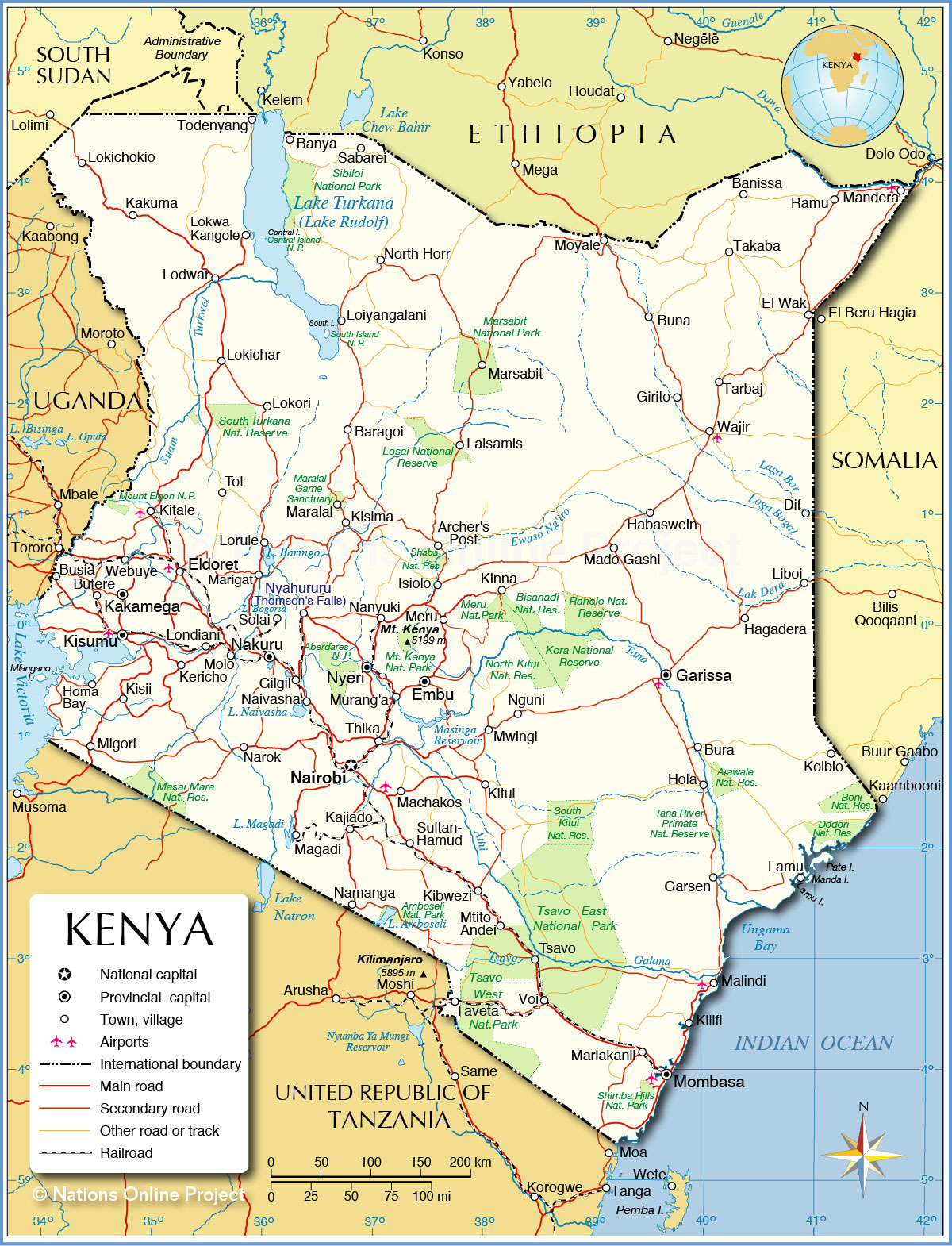
He's not American. Is he Kenyan, English or Irish?


How can one man be eligible for citizenship in four countries? Birthright, permanent residence, having a grandparent born in another country, or changes in governmental jurisdiction over the place you were born can all qualify you for citizenship. But proving that you qualify and applying can sometimes be a long and confusing process.

My husband is an English citizen with a UK passport and permanent US Resident Alien status. I am American, and our children were all born in the US and are also American citizens. Because children of British citizens are eligible to apply for a British passport, one of our sons asked me to help him complete a UK passport application. A US citizen may obtain a foreign passport without putting his American citizenship into jeopardy. It is not against US law to do so, as long as taking on the foreign citizenship does not require you to renounce the United States in any way (and it rarely does). A UK passport will allow him to travel and work freely anywhere in the European Community (EC) without first having to obtain a visa. This will be a great asset to him when he wants to visit his English relatives for a long period, or even work abroad.

In Ireland, Italy and elsewhere, obtaining a foreign passport is a two-pronged process. First you must prove your right to citizenship in the foreign country (and register the birth), then you apply for the passport. In the case of the United Kingdom, however, it can all be rolled into one step. There are usually a few ways in which you can qualify for citizenship. Most of the foreign passports I have obtained for clients are done by proving that they had a grandparent born in the foreign land. As long as that grandparent was not naturalized in America before the applicant's father was born, the applicant is qualified "by descent."

When our eldest son was born, I tried to have his birth registered in England. If I had been successful he could have just applied for the passport today as any English citizen would. Although my husband is English, he wasn't born in England: he was born in Kenya! At the time of his birth in 1960, Kenya was a Protectorate of the UK, which is why he was granted UK citizenship. All children born in Kenya at that time are eligible for UK citizenship themselves, but not all are able to pass eligibility down to their children.  The only way he could pass down his UK citizenship status to our children was if he were a UK citizen "otherwise than by descent," and that pretty much means either a natural-born citizen or someone allowed to qualify as such because of some special exceptions written into the law. The UK did not accept the application to register our son's birth because my husband was not born on UK soil, and thus they concluded he was a citizen "by descent."

But we got lucky and qualified under one of the exceptions. My father-in-law was sent to Kenya by the UK government to work in schools there, so my husband's birth is treated as though he were born in the UK, therefore he actually can pass down his citizenship status. When I originally tried to register our son's birth, I had not known this, but we now have a letter issued by the UK government which states that at the time of my husband's birth his father was in Kenya working for the UK government, so all I need to do is send that letter plus the original birth certificate.

The next obstacle is that I don't have an original birth certificate: all I have is a photocopy. I wanted to see how difficult it is to obtain a Kenyan birth certificate so I went to the central website for civil registration in Kenya. It looked promising –– under the proper district I got a name and email address (info@births.go.ke) and sent a request off to them. Sadly, my email was returned as "unsendable" a few days later. I  also checked the catalog of the Family History Library in SLC, and not surprisingly, they had no civil registration or church records for Kenya. 

Yet I knew that the British have been diligent about registering overseas births for many years, and on the Kenyan Consulate's website I found a very clear explanation of how the whole process works. I was then able to order two copies of his birth certificate (Certificate of Overseas Birth) from the UK General Records Office (GRO). I'm fairly sure they will not look at all like the photocopy of the one issued in Kenya. Once those arrive I can attach them to the forms, send photos, son's birth certificate, my birth certificate, our marriage certificate, and a big fat check to the British Embassy in Washington DC, and he should be good to go!

The funny thing is, my husband is English, but could have applied to become a Kenyan since he was born there. He could become an American too, and may yet. And in addition, since he has a grandparent (three out of four, actually) born in Ireland, he could also apply for Irish citizenship! So he could have four passports if he wanted! He's a simple kind of guy, though, and I suspect he'll stick with just the one.


Enhanced by Zemanta

29 March 2011

The Ancestral Chalybeate Spa

Ann FitzGerald, Priscilla (Barnes) FitzGerald and Polly (FitzGerald) Kimmitt
at the original FitzGerald cottage, Farnes, Kerry, Ireland, June 1989
My people should never have left Ireland. In so doing they deprived the family forevermore of the healing powers of ferruginous water. I know this because of one tiny phrase in a book with a very long title.

Reading contemporaneous accounts of Ireland helps us to envision ancestral townlands as they were before our families left. A mainstay in every Irish researcher's library is Samuel Lewis' A Topographical Dictionary of Ireland, comprising the several counties, cities, boroughs, corporate, market, and post towns, parishes, and villages, with historical and statistical descriptions; embellished with engravings of the arms of the cities, bishopricks, corporate towns, and boroughs; and of the seals of the several municipal corporations: with an Appendix, describing the electoral boundaries of the several boroughs, as defined by the act of the 2d and 3d of William IV, 2 vols., (London: 1837).

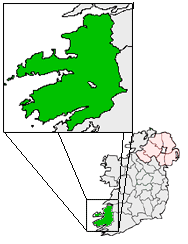
County Kerry, Ireland
Written about ten years before the Great Famine (1845-1852), it gives the history and lay of the land of every little townland in Ireland. My father (James Patrick/Edmund FitzGerald 1910-1988) always said his father's FitzGerald line were from Castlemaine (Caislean na Mainge) in county Kerry. Castlemaine lies on a harbor at the junction of the Dingle Peninsula and the Ring of Kerry, or just under the first peninsula on the map. It was a market town and the site of a castle built jointly by two Irish chiefs, the Earl of Desmond and MacCarthy More, in order to defend the crossing of the River Maine. Each chief was to alternately protect the castle, but at one point MacCarthy decided he didn't want to give it up. It eventually fell into ruins. Today there is nothing remarkable about the town. A few pubs and bed and breakfast establishments and some fine views are all that distinguish it.

What my father didn't know was the name of the area in which his family had lived: a little part of Castlemaine called Farnes. He and my mother went over to Ireland in 1978 to visit some of his cousins, and I'm quite sure they went to the house his father was born in, below. By asking the local residents, they managed to find the FitzGerald homestead. Compared to the adjacent older cottage, this was quite a step up for the family. I do wonder how accurate our information was, though. I would imagine that my grandfather, Patrick John FitzGerald (1867-1949) was born in the little cottage and thanks to money he and his siblings sent back to Ireland from the US, the family was able to build this once fine edifice.

Ann FitzGerald, Myles Kimmitt, Priscilla FitzGerald
FitzGerald Homestead, Farnes, Kerry, Ireland, June 1989

My mother, sister and I discovered the name when we visited the local parish to view their records in 1989. All of the related FitzGeralds we found lived in Farnes.  Farnes is a townland (more like a village or a neighborhood) in the civil parish of Kilgarrylander, and never gets any press. This is understandable. There isn't much there except gorse-covered hills dotted with the occasional cottage. 


View of the Slieve Mish (Sliabh Mish) range from FitzGerald home,
Farnes, Kerry, Ireland, named after a mythological Celtic princess
who was famed for being cruel.


So there is no historical detail about the actual land my ancestors lived on anywhere, except in one tiny mention in Samuel Lewis' Topographical Dictionary in which he states: "Three miles to the west of the town are the ruins of Castledrum, erected by the sept of Moriarty; and on the lands of Farnass is a good chalybeate spa." What? Peasant farmers living by a spa? Well, this is exciting! Something, at long last to distinguish them from the hordes of peasants the world over. MY ancestors lived near a chalybeate spa. So what is it, then?

The word chalybeate derives originally from the Latin word for steel, "chalybs" which in turn is taken from the Greek "khalups" after those who had invented iron working in Greek mythology. It is simply mineral water that contains iron. Wikipedia has this to say about Chalybeate: "Early in the 17th century, chalybeate water was said to have health-giving properties and many people have promoted its qualities. Dudley North, 3rd Baron North discovered the chalybeate spring at Tunbridge Wells in 1606. Dudley North’s physician claimed that the waters contained ‘vitriol’ and the waters of Tunbridge Wells could cure: the colic, the melancholy, and the vapours; it made the lean fat, the fat lean; it killed flat worms in the belly, loosened the clammy humours of the body, and dried the over-moist brain." It was also said to cure hysteria.

And therein lies the heart of the trouble. By leaving the chalybeatic spa in Farnes (Farnass) my ancestors opened the door to all manner of physiological ills. No wonder some of us are melancholy, some too fat, some too thin. I see it clearly now! This is why my clammy humours are not loosened and my brain remains over-moist. (I do wonder if the roof on the old cottage had anything to do with an abundance of iron in the local water--see first photo.) It is apparent that we must now make an annual trek to the homeland to restore our shattered tissues. I look forward to asking the locals all about it!

Priscilla (Barnes) FitzGerald
Farnes, Kerry, Ireland, June 1989

14 March 2011

One Lovely Blog Award to 15 of My Favorites


Well, I'm honored to have been awarded the One Lovely Blog award from Lisa Swanson Ellam at The Faces of My Family blog! I'm not sure why because lately I've hardly posted much, but I very much appreciate the mention! This is always a great way to get introduced to new bloggers and I've enjoyed reading Lisa's blog. So much good writing out there!!

The rules of acceptance are :

1. Accept the award, post it on your blog together with the name of the person who granted the award and their blog link.

2. Pass the award on to 15 other blogs that you've newly discovered or just love so much.

3. Remember to contact the bloggers to let them know they have been chosen for this award.

Here are the lovely blogs I have selected. Some are new to me, others are like old friends. Please take a minute to browse through them!


Circlemending by Jean Hibben

Cyndi's List by Cyndi Howells

Family Cherished by Valerie

Find My Ancestor Blog by A. C. Ivory

FGS Conference News Blog by Thomas MacEntee

GeneaWebinars also by Thomas MacEntee

Long Lost Relatives.net by Susan Petersen

Marian's Roots and Rambles by Marian Pierre-Louis

NARAtions by John

NERGC 2011 Exploring New Paths to Your Roots also by Marian Pierre-Louis

Paula's Genealogical Eclectica by Paula Stuart-Warren

The Family Recorder by Audrey Collins

Enjoy!

25 February 2011

RootsTech Two Weeks After

RootsTech from a Distance
I want to follow up with some thoughts about RootsTech after two weeks of beating my skull against the wall as to why it unexpectedly blew me away. There's nothing like stepping back to give you a different perspective.

Movement of Information
Massive tree from very close up
As I keep saying, it's not about the gadgets, but more about a slow but massive shift in how information is processed and disseminated. This is on two fronts: first, it marks the beginning of a stronger demarcation between the amateur and professional genealogist. And second, it is the start of a merging between those who use the information (genealogists) and those who connect it to us (software developers). And let me just clarify that it is not actually the start of these shifts, but just my own awareness of them. That's what blew me away. It has been happening and I wasn't looking beyond the trees to see the forest.

The Newbies are Coming, The Newbies are Coming!
We're all in the same boat
Whilst networking I asked a lot of questions about the process of filming the Who Do You Think You Are episodes, and the responses forced me to rethink some of my previous statements. Last year I mistakenly assumed that the actors were acting. I've been told, however, that they were led along during filming in a manner similar to a true research process (if somewhat facilitated). What I now understand is that most of them actually were quite interested in the process itself, and the details along the way, and were just as vulnerable to the genealogy virus as the rest of humankind. What we saw on film was their first reaction to information, not something contrived. They took notes, even if the final edit didn't show them doing so. They may be famous but they are just as vulnerable on the inside as the rest of us. WDYTYA is helping people understand the mystery of their ancestry and the excitement of the hunt, and it's going to create a huge influx of newbies. Newbies, by the way, only consider themselves "beginners" BEFORE they log on to Ancestry. Once they've messed around on the internet for a bit, most of them promote themselves to intermediate. And that's okay, but they need to realize that they will naturally have gaps in the information they have acquired. I'll leave that to the educators in the field to sort out!

What is Good Enough?
Step back to gain perspective
As the interest in genealogy starts to permeate the culture we can see that it is time to make a pronounced break between amateur and professional genealogists. People are attracted to genealogy because they want to know about their families: they don't want to write academic papers! Rather than dread this and fear the fate of standards, we can simplify the process, possibly with the use of well crafted programs like RootsMagic. Amateurs should not have to maintain the same standards as professionals, rather they can work towards professional citations and proof standards on a continuum. Not everyone is going to be able, or even want to produce the same kind of work as a professional. This does not mean that it cannot be valid research. As long as some kind of minimal source citation is given, it may just have to be up to the professional to validate it. There has to be an acceptable lowest common denominator of source citation. This is very freeing because I always feel like the lone defender of citations. I don't harp on proper format with neophytes, but it's always in the back of my mind that someday they will learn to love them. I do try and make everyone see that they will be a lot happier if they manage to jot down where their information is from. Now I can encourage people to just start in, be aware of the where their information is coming from, and trust that in time they will come to understand how helpful it is to have accurate source citations. That's how I learned the lesson: I hadn't noted where I got a certain document, went back to find it, and realized that it existed in many forms and all iterations were not equal. After you spend a day looking for one tiny lost bit of information you finally realize it's worth writing it down when you first find it. And the more you research, the more you feel the repercussions of not doing so. Let's just help everyone understand a simple way to keep track of their research.

I Loves Me a Good Techie!
Extreme nerdiness incarnate
The most critical issue confronting genealogists and technologists at this time is the gedcom standard. I am currently suffering badly from using one genealogy program on one platform and trying to export it, citations and all, to another program on another platform. Citations don't like this method of travel and are rebelling against it. Come to find out (and I sort of knew this, but conveniently forgot), each genie software program makes enhancements to their programs that allow the user to add much useful data. What we users aren't always aware of is where the line between information and exportable information is drawn. Since genealogy is to be disseminated and shared amongst family members and other interested parties, this presents an enormous obstacle. RootsTech gave us an opportunity to open a critical dialogue between genealogists and programmers which will end decades of frustration of people on both sides of the divide. Boundaries will melt away and that will encourage us all to explore new, shared territory, and in the process become more creative.

New genealogists have a world of information to share with us, so let's welcome them with open arms, help them learn effective techniques and teach them to love software developers! Bring on RootsTech 2012 (v. 2.0)!

18 February 2011

Cyndi's List Turns 15 on March 4th, 2011!


Quick, where is the first place you go when confronted with a new locality or time period in your genealogical research? (OK, maybe I gave it away.) Oh sure, you could try Google or Wikipedia, but where can you get at all things genealogical in one fell swoop? Everyone knows it's CyndisList.com. Cyndi will point us to the vital records, county histories, maps, yearbooks, diaries, photos, and ever so much more. That's where you go when you don't know what your're looking for. Really!

It's not easy managing information. Personally, I think it is one of the biggest obstacles to our research in the internet era. We've all been so excited to see records being digitized and uploaded that we often neglect the awesome responsibility of making them accessible in a clean and efficient way. How can you  use them if you can't find them? Thankfully, Cyndi is here to show us the way. I'm just realizing it as I write, but my own bookmarks are arranged in a manner similar to Cyndi's website, on a much smaller scale, bien sûr, but I believe I've been unconsciously modeling after her setup!

Cyndi's List has been online since March 4, 1996! I find this amazing. I remember thinking how young she was at the time. What a remarkable feat! It's probably the oldest bookmark in my browser. In 1996 half of my friends didn't have a clue what the internet even was! Just now I was browsing through the site looking at things I don't usually consult and found her business timeline. It's fascinating to witness how Cyndi took what was originally a 6-page list of websites and turned it into the ultimate genealogist's research finding aid. By 1998 she was being featured in The Wall Street Journal and USA Today, well on her way to giving Cyndi's List a solid footing in the American vernacular. 


And she's still around, more valuable than ever. Every genealogist who uses the web MUST use Cyndi's List. Do you ever question if you've actually checked every single thing available on the web? I do it all the time! And when I get that nagging self-doubt welling up in my bosom, it is Cyndi that either reassures me I have, or leads me to one more resource. If I have a client who wants to help with the research, or learn more, I sent him to Cyndi's List first thing, just to explore. It's amazing how much you can learn there.

Here are a few facts about Cyndi's List by modest Cyndi herself, with my brash comments after them in purple:

Why Donate Money to Cyndi's List?

•   In the beginning there were 1,025 links. Today there are more than 290,000. And who do you think has to keep those 290,000 links current? One person: Cyndi! That is a LOT of links to correct, because we all know how frequently they change. It's a gruelling, Sisyphean task that she cheerily embraces day after day.

•   This site continues to be one of the top research spots online for genealogy. It really is. This isn't hype. It's free, it's super easy to navigate, extremely thorough, up-to-date, and it teaches you as you navigate! Oh, did I mention that it's free?

•   Cyndi's List has always been free for everyone to use. I love how Cyndi is adamant about not charging money for her website. Very noble. But hard to maintain in today's economy, and especially in today's market where genealogy has hit the big time. How has a one-woman show managed to still maintain that top spot for so many years?

•   To date, Cyndi's List has been supported solely by advertisements. And we are so lucky for that. Are you the type that uses shareware until the free trial period is over and drops it? Do you ignore when programmers ask you for a mere $15 in return for using their brilliant piece of software? Well, it's easy to gloss over Cyndi's tiny little donate button, too, but that doesn't mean we shouldn't all just throw something her way now and then. I don't know what I'd do if her site weren't there.

•   This site is in the process of a major upgrade, the first since 1998. Yes! Coming fresh off the first RootsTech ever, I am delighted that Cyndi is looking toward the future! This is great news.

•   Goals for upgrading would include easier use for both the administrator and site visitors, making adding and updating links a quicker process for everyone. Improved navigation and other features are also on the to-do list. Yesssss! More links, more links!

•   Cyndi's List is a one-woman business. Upgrading is very expensive. Your donations would help the site to grow and expand, thus making your searching much easier and more productive. She's so polite! the woman obviously loves what she does, is dedicated and has made our world a better place. 

I appreciate all the support and encouragement users of Cyndi's List continue to give me each day. Thank you! And thank you, Miss Cyndi. You provide us with a great resource!

Happy Birthday, Cyndi's List, and many Happy Returns of the Day! And to the rest of the genealogical community, get on out there and donate! Let's see how much we can raise for the site before the big day!


13 February 2011

The Week My Outlook on Genealogy Changed: RootsTech 2011


The first annual RootsTech conference came to a screeching halt yesterday afternoon at 4:00 pm and left 4,000 people wondering where we go from here. As I keep broadcasting on Twitter and Facebook, this conference marks the start of a shift in perspective in the genealogical world. I'll describe my own experience and hope it helps explain my bold assertion.

Image representing iPhone as depicted in Crunc...Image via CrunchBase
I usually visit Salt Lake City every January during the Salt Lake Institute of Genealogy but this year I couldn't, so instead booked my week to coincide with RootsTech. I figured there would still be lots of people I know and I could visit the Exhibit Hall to network. I didn't plan to attend many sessions. I wasn't coming to play: I had real work to do. Besides, I'm already a techy, so I didn't need to be convinced to enter the 21st century. I love the latest gadgets, monitor new developments and keep up to date. I'm already in constant reach via the internet, being a sad, pathetic geek who actually goes to sleep cradling her iPhone whilst listening to audiobooks, and awakens bleary-eyed (sometimes with the cord wrapped around my neck) to check email, FB status and tweets. What could I possibly learn about technology and genealogy? I'm already all over it. HAH! Wrong! Just goes to show, you don't know what you don't know. It's not about the gadgets.

Before the conference even began there was a soft hum developing. The organizers stayed in touch with attendees, keeping us informed of late-breaking developments. Tuesday we heard there were 2,000 attendees. Compare that to the two major national conferences, sponsored by NGS and FGS, which usually attract about 1,500. The night before it began the number ballooned to 3,000!

We could have lounged in bed and watched the keynote online instead of stepping across the street, but the buzz was calling us, so we went. Because of so many last-minute sign-ups, registration was jammed, so I just skipped it and went to the hall to witness the keynote, given by Shane Robison, Executive VP and Chief Strategy and Tech Officer at Hewlett–Packard and Jay Verkler, President and CEO of FamilySearch. It was held in an enormous room, with rock music playing, four huge screens, photographers everywhere and an announcer who counted down the minutes to blast-off in a smooth-as-silk polished media "voice of God." "This ain't your father's genealogy conference," was the phrase being circulated. OK, fine, so it's jazzier, in a slightly comical, corporate kind of way. Alarming to the elderly, and amusing but not earth-shattering to the techie crowd.

Myles Kimmitt
Patent-Worthy Circuit Design Engineer,
Enabler of Moore's Law
Shane Robison came on to put into perspective the vastness of the internet and the potential for growth. He reminded us of Moore's Law which asserts that the amount of computing power they can squish onto a microprocessing chip doubles every 18 months, thanks to my husband and other genius engineers of his ilk. Moore formulated this in 1965 and it has consistently been proved correct. We never can believe it will still happen, but it does. Yes, yes, I know, technology is grand and getting more and more efficient. The amount of data online also doubles every 18 months which I could feel, if not give specific statistics about. Ho hum. The immensity of potential is great, but not surprising, and definitely not inspiring.

Just hearing Jay Verkler's bio recited was enough to mark him as someone to whom I need to pay particular attention: obvious software genius, having been with several Silicon Valley companies, the most familiar of which to me was Oracle. But here's the sentence that got me: "Mr. Verkler studied electrical engineering, computer science and chemistry at the Massachusetts Institute of Technology as well as Japanese and Asian studies at Harvard University." Except I swear they said Japanese and Chinese... Not your average geek. And he pulled this conference together in the maniacally short period of seven months. Unheard of! He bounced onto the stage and won us over with his passion for spreading knowledge.

FamilySearch Mini-Lab
Have your cake and eat it, too!
This is the crux of the conference. It can't be easily explained, or at least I haven't yet extracted the essence of what is making everyone so slightly crazy. We don't even have a clue what we're in for. Remember ten years ago? Many people didn't have cell phones. Professional genealogists didn't use the web. People were suspicious of Ancestry.com because they made us pay for access! Then FamilySearch came along and we got the IGI online, but the IGI is based on two things: member submissions and extracts. Many people did not understand the difference. Remember those that said you can't trust anything you find on the web? That wasn't very long ago. They said this because all they had found was personal family trees with no documentation, and facts such as born 2 July 1603, Plymouth, Massachusetts, USA. They threw out the baby with the bathwater. Eventually, the baby was resuscitated as people began to realize that valid original documents were being scanned and uploaded, careful (often volunteer) indexers were donating their time to give us access to these documents, and today you'd be considered horribly inefficient if you did not start most research projects with an overview of the internet. Things change quickly.

RootsTech 2011
Randy Whited consults the Unconferencing Board
Jay outlined the goals of the organizers. For old genealogy dogs like me, it was exciting to have a different model. The focus here was on connectivity, collaboration and community. Many sessions were to be interactive. They introduced the concept of Unconferencing, where you sign up on a white board for a time spot by entering your brilliant idea, others gather and energetic collaboration ensues! People emerged from these with eyes sparkling and  I overhead several people describing conversations between developers and genealogists that left both feeling validated and motivated. Microsoft provided a fun "Playground" with pool tables and air hockey, XBox games, chess, ping-pong etc., which encouraged the programmers to get creative and the genealogists to let down their white hair a little. It was hysterical. I even wished my kids were with me! The organizers created a collaboration zone with couches for relaxing and knocking heads together. They served popcorn at the software demonstrations. Little additions like this keep everyone on their toes and help us accept new paradigm.

So I keep talking about how everything is changing, but what, exactly?? Curt Witcher, Historical Genealogy Department Manager at the Allen County Public Library was instrumental in forcing me to undergo a fundamental shift in perspective. His keynote moved many of us to tears, over and over again. This is not normal for me, to gently weep during keynotes. Curt's message was "just get the story out there." Instead of harping on WDYTYA producers for not ensuring that white gloves be required, for instance, be delighted that our passion is being introduced to more and more people. Find ways to welcome them, encourage them and help them. And that doesn't mean you start by quoting ESM on source citations. Everyone deserves the chance to know the story of their ancestors. It's about our humanity, the essence of life, our shared journey. We can help them to understand professional concepts later––just connect up with then first, and help them connect with others. And above all, share the results of your own research! Don't be afraid of people stealing your work, just disseminate it!

Nathan FitzGerald Kimmitt
Official Welcoming Committee
Barnes Family Reunion
June 2010, Scituate, Massachusetts
Genealogy used to be practiced by individuals working at home or in libraries. They were removed from one another. Unless the researcher wrote a book for his family, they usually never saw the results of his hard work unless it was displayed in a pedigree or fan chart on the wall. In fact, that's just what I did last summer to introduce some of my own relatives to our ancestors. People were interested, but it was very static and dry. A bigger hit were the photo albums, but what we all loved the most was recognizing shared family traits, or hearing stories we had somehow missed before. Just being together was the fun of it. We made a video which will be so precious to my children's children, when they see my sons (their dads) at 19 and 17 with their Great Uncle Eben who was 80+. The key to this conference is the counterintuitive realization that technology will bring us closer. In fact, our own reunion took place because of my blog, which brought a long lost branch of our tree back to the fold. The excitement of finding each other online, first via the blog, then telephone, then Facebook, led to the face-to-face reunion.

Once I heard Curt, I gave myself over and just stayed at the conference. Luckily, I had exhausted most of my research leads, so being in SLC and not at the FHL was tolerable. The nagging guilt was soon overcome by the rush of ideas that flowed for the next two days. The floodgates were opened and our imaginations are finally able to go there. Just as Facebook keeps me connected to family, friends and colleagues in a most intimate way, so will technology enhance my ability to serve my clients. I will provide them with a better service because my product will not just be a written report with charts and a gedcom, but I will attempt to bring the passion I feel for their families to them as well. I will encourage newbies and not cringe (much) when they say, "I'll remember where I found that, I don't need to cite my sources." I won't talk about ESM until the third date. And I will be tireless in advocating to local societies the need for them to take their mission online. Otherwise, they will fail. I will help them find a way to bridge the gap between computerless members and the rest, and I will show them that the only way to attract new members, and members in large quantity, is via the internet,

RootsTech 2011
Media Hub

Many initially worry that putting information and webinars online will kill societies (and society!) because members won't bother to leave their homes. Again, counterintuitive! The technology does not replace our humanity, it brings it alive and serves to connect us to one another, be aware of one another, and causes us to want to gather. The Official Bloggers, shown above hard at work, managed to get the word out to the community, not just by blogging, but also via Facebook and Twitter and probably stuff I haven't even heard of! Many other non-official participants also tweeted constantly about the amazing sessions we attend, and drove those not in attendance into a jealous, but happy frenzy. It's not about the technology, it's about how the technology draws us together. 

RootsTech 2011 was an amazing accomplishment. The organizers dared to patch this together in a mere seven months, and there were some issues. As I mentioned, registration was jammed. It was hard to find individual lecture notes in the syllabus.  They could have used a few traffic monitors. But hese are minor considerations and inconveniences that were easily tolerated by attendees because the reward to being present was so great. Organizers are going to have their hands full preparing for next year's RootsTech. I can't imagine how they will pull it off again, given the exponential nature of the power of technology to atttract attendees apparently, but the innovation in the minds of those planning this event is impressive. I can't wait for RootsTech 2012 (v. 2.0!) and I hope to see you there 2-4 February 2012. We'll have fun!

RootsTech 2011
Microsoft Playground

Enhanced by Zemanta

10 February 2011

Honeymoon in the Philippine Islands

Today I was going through microfilmed marriage certificates from the Philippines. It was slow going since each certificate had a whole page to itself, not like scanning an index (no index!) or register, even. So I paged through, one at a time, in search of the marriage of a young solider named Perez. I noticed that some of the names are creative and evocative of character traits, so I got to thinking how each of these grooms would behave on his honeymoon. Then I just made up a story where they were all the same guy.

Consider the blushing groom as he signs his marriage contract. He is so in love with his bride-to-be and ready to:

Mr. Go Go

The wedding reception is a little wild. Feeling on top of the world, he enjoys the festivities, indulging in food and wine perhaps a bit too much.
Mr. Dionisio Green

All that wine takes its toll. Though he tries his best, the wedding night doesn't quite meet the bride's expectations.
Mr. Imprescion Ordinario

It's so bad, in fact, that she gets a fit of the giggles.
Mr. Pedro Hilario

He doesn't take it well.
Mr. Severino Defuntorum

See where your mind can go when you're cranking microfilm all day?

08 February 2011

NERGC Presenter Interview: John Philip Colletta


11th New England Regional Genealogical Conference


Sheraton Springfield Monarch Place and Springfield Marriott
Springfield, Massachusetts

John is a nationally known and well loved genealogist, having been teaching and presenting at conferences for many years now. He has published numerous articles and three books: They Came on Ships, Finding Italian Roots, and Only a Few Bones. For 21 years he taught workshops at NARA and the Smithsonian, and today he lectures and teaches at Samford (IGHR) and SLIG, as well as at other venues across the country. I've always been impressed by the high quality of his writing, and hearing him in person, a warm and thoughtful personality shines through. Here are some excerpts from the interview.

Polly: You begin Only a Few Bones with yourself at fourteen years old interviewing your Grandmother about family history. I know that the story your grandmother told about Barbara Ring spurred your research, but what sparked this initial interest at such a tender age? 

John: My mother! One summer when I was home from school and not knowing what to do and moping around the house, my mother came across an article in a women's magazine about illustrating a family tree. So she sat me down with a piece of paper and a pen and said, "Here, you can draw me a family tree. Ask me the questions." Of course, she had no idea what it would lead to, and she has told me so several times since.

Polly: I'd like to hear about your transition from doctorate in Medieval French studies to genealogy because I was a French major in college and have also moved into genealogy. What is your story? 

John: It was by necessity. When I finished my doctorate in the 1980s PhDs were a dime a dozen: there was a huge shift in demography. Baby boomers were out of college, tenured faculty was laid off, and so I taught only part time. I had a big decision to make in the mid-1980s. Was I going to be bounced around from university to university teaching beginning grammar and French or would I shift into a whole different field which was growing and for which I had the skills? So I made the shift into genealogy. Everything I was interested in––history, language, paleography, old records, foreign countries––could pretty comfortably be transferred over. Besides I was a teacher. By the 1980s genealogy was no longer the domain of the blue bloods and Mayflower descendants. Genealogists of African-American descent, Jewish, Irish, Italian, Greek, Polish, Slovakian, everyone was doing genealogy. But for most Americans the stumbling block was transitioning to the foreign records and languages, and that's where I fit in beautifully.

Polly: Have you ever worked in other professions besides teaching and genealogy? 

John: Oh yes, I worked half time at the Library of Congress for nearly twenty years to pay the bills. I worked in the US Copyright Office while I was building up a repertoire, and I also taught at the National Archives and the Smithsonian. I really worked at it to get into self employment. I don't know if I'd recommend it to young people as a way to make a living. Today it requires a lot of business sense.


Polly: I’m interested in the process you went through when writing Only a Few Bones. I love how you were initially astonished at your own preconceived notions about the South. Did you feel disappointed that history is not taught more accurately? 

John: I wasn't so disappointed as I was made aware of the fact that when you take 12-week history courses in college, by their very nature they are filled with generalizations. They talk about The Deep South, not distinguishing between the Florida peninsular, the Mississippi Bayou or Texas, for instance. Studying in school you learn generalizations which hold true for most situations, but in genealogy you deal with the specific. Your ancestors take you into corners of American history that just don't fit the generalization. In that particular place, at that particular time, no, it wasn't this way. And we as genealogists learn this and appreciate it because we go down to specific families and countries and we learn on a small scale what the events were at the time and that's often not what the history books say. It simplifies it to zero in specifically on the county of the ancestors. I tried to be as fair and unbiased as I could be in telling the story. I always say, "Look at the records, let the records tell the story."

Polly: How did you keep track of the vast amount of data you collected for the book? 

John: The way they did it in the 18th century, I guess. I have file folders by subject. I have a Context folder for hairdoes, shoes, clothes; a Place folder; and each main character, major family, and major topics also get a folder. I'm writing a book now about a man who was a founder of bronze statues in the 1850s, so I've got folders on New York foundries, bronze castings, and the Washington Navy Yard where he worked for a while casting canons.

I do not digitize every doc or source or record that I find. I'm still one of the few people that will go around with a pad and paper. After I compose an article or a chapter, I take out each folder and review the documentation page by page to make sure I have incorporated all of the pertinent information. It's time consuming but then I can check it off and know my work is complete.

Polly: I assume that you use some technology in your work. Technology has come a long way from word processing, email, online databases, through Powerpoint, social networking, and Skype, to today's virtual meetings and web presentations. Do you use technology reluctantly or are you on the cutting edge? 

John: I whine and complain and rave and rant. I hide, I cry. I find change difficult. My colleagues would recount horror stories of being before an audience of 300 people with no slides appearing, but today there is better compatibility in equipment so I am taking the plunge. Knowing that NGS and FGS both require electronic presentations, as do the New York Public Library and NERGC, brings it home. Nobody under 30 knows what an overhead project is. Archives, universities, just can't accomodate. I've been kicked into the 21st century, but it's magnificent when it all works well. That's just the way it goes. My ancestors probably had trouble shifting from a fountain pen to the typewriter, I guess.

This morning I'm working on a talk I'm giving at NGS in Charleston to a group of genealogical speakers and I'm going to be speaking on the changes over the last 40 years. I have found it extremely difficult to get into the technology. It's not a matter of intelligence or ability. We all have different gifts. I know what I can do well, what I've honed over the years. Technology I am finding extremely challenging. You've caught me at a crucial turning point in my life. I made a decision a few years ago that if I'm going to continue to teach, which I love to do, I absolutely must get with the technology and so I have been transfering my hundreds and hundreds of overheads to Powerpoint, and by the end of 2011 my goal is to be totally transferred over. Fortunately I have Christine Rose. She is a dear friend of many years, and my mentor. She (software) and her husband (hardware) have been very gracious in giving me time when needed and they have offered to help me buy a projector this spring.

Polly: Do you plan to attend Roots Tech? 

John: I seriously considered attending, unfortunately because of other commitments I can't, but that's what I need. I need to get into a classroom and learn about new technologies. A young colleague of mine from the New England Historic Genealogical Society, Joshua Taylor, is going to do a whole presentation on using technology in teaching genealogy. I'm going to be there! But as a self-employed individual I haven't had any institution behind me. And no family geeks. We have to be self motivated and keep up our education on our own and that's hard to do.

Polly: You wrote a very useful handbook on doing Italian Research called Finding Italian Roots. How often to you visit Italy?

John: Not much. I do go biking in Tuscany. Haven't worked much on my father's family in years. The paternal relatives now want a book like Only a Few Bones, but for the Italian side. I'd love to do more research about my Italian ancestors, one or two branches in particular that fascinate me. I've not really done much with Italian research. I do a lot more with my mother's background and my American ancestors simply because the records are here. I am making it known now as a revamping of my career that I can read old Italian very well. I made many trips in the 1970s and 1980s to Sicily in particular, where my father's people are from. But we have to work with what is more readily available, so I mainly stick with American research.

Polly: What sort of things to you do to relax? 
John:  I enjoy my work tremendously. I do love publishing, and I love to see my words in print, but I also know how to relax. I make time for a full life apart from genealogy. I have very dear friends of many years. I have a home that I maintain and "entertain in" which Washington DC is famous for. I do theatre, I love opera, and the National Symphony is spectatular. Biking is a major thing. I maintain quite a serious regimen of biking up and down the Potomac River and out into Virginia. I find that physical fitness goes hand in hand with creative juices. I work better, think more clearly, enjoy everything much more, when I feel fit. On my last couple of trips to France I went biking in Normandy and Brittany, and did no genealogy or historical research!

I also have a great family of four brothers, a sister and Mom up in Buffalo. If you come from a big family, a lot of your social life is already built-in and dictated, so to speak. I've got a great family, we're very close.

Polly: Is there anything you want to say about your NERGC sessions?  

John: I hope people will enjoy them!

F-212 – Friday, 10am – Federal Court Records, 1789-1920s 

F-221 – Friday, 1:45pm – Erie Canal Genealogy: The Peopling of Upstate New York and the Midwest: Really an eye-opener. Everybody enjoys this talk.

S-313 – Saturday, 10am – The Library of Congress: An Introduction and Overview: I've been at the LOC since 1971. It's an astounding, astounding great treasure in this country for research. My only problem is whittling the session down from two hours to one. There is so much to say about resources for genealogists.

S-341 – KEYNOTE Sat. Banquet, 7pm – Hacks and Hookers and Putting Up Pickles: Snares of Yesteryear’s English. This is a wonderful talk and very important for genealogists to understand how language changes: how the meanings of words are different in different parts of the country at different times. There's an imporant message there.

End of Interview
Enhanced by Zemanta

07 February 2011

What It's Like to Research at the Family History Library

Family History Library, Salt Lake City, Utah
Fun!
I'm on a flight enroute to Salt Lake City and am thinking about the first time I went to the Family History Library, not all that long ago. I was so happy I thought I'd pop. I felt like a five-year old on Christmas Eve. I was very excited about what I might find, but also a little nervous that it would be so overwhelming that it would take me days to get up to speed. Instead, I read up on it ahead of time and followed what so many sage authors told me to do. I'm not going to reinvent the wheel and go through everything you need to know, but I can point you to others who have already done so.

Prepare Ahead!
My fellow Genea-Blogger, Randy Seaver published a post, Preparing to Visit the Family History Library back in January of 2009 that was very helpful. And just as helpful are the comments left by his readers.

Kimberly Powell, About.com's genealogy guru, has a great introductory article, Research at the Family History Library, for new researchers.

EHow.com has an article, too including info on how to download the FHL's special bookmark collection onto your own computer which can be helpful before you go.

The old FamilySearch.org has a FAQ page which might answer some of your questions as well.

Take Advantage of the Tremendous Website
In order to use the library effectively, you should be familiar with the website at familysearch.org. It's layout is deceivingly simply. What first catches your eye is a search form. This is the home page, and where you do searches for information the FHL has uploaded to the website. You may have already used this, and will continue to use it while at the library as you update your information.

But let's look first to the bar at the top of that page.


While researching you will be concerned with the first two on the left. Click on FamilySearch to get back to the home page from wherever you are on the site.

If you click on Learn it will bring you to the FamilySearch Wiki. A wiki is like an encyclopedia, with the entries constantly being updated. This is where you go when you have a question and wish you had a live person to ask. It's the next best thing! For instance, I'll be doing some research in the Philippines, so I immediately went to the FamilySearch wiki page on the Philippines to find out what records have been created (and by whom), which ones have been filmed by the FHL, and which ones are available on familysearch.org. This is a tremendous asset to the researcher! So, of course I went to the wiki to learn tips and techniques for researching at the FHL.

Back at the home page you see this:
Look at the line with Historical Records, Family Trees and Library Catalog. Historial records are what have been uploaded and can be found on the FamilySearch website. Family Trees are submissions from all sorts of people and can be useful, but can have errors and should be verified. And finally, this is how you access the card catalog.

The Card Catalog is Your Best Friend
I'm going to assume you have done most of your preliminary research, though. Before you go you'll need to have your notes in order, with lists of things you intend to research. In order to do this, and to save precious research time, you should go into the Family History Library catalog. I don't want to give step-by-step instructions of anything here because the entire website is changing a lot these days, as they upload more and more information for lucky genies. But if you go to the wiki you'll find Introduction to the Family History Library Catalog which will help you get organized before you go. While you're doing your advance research, you'll be improving your skills and speed, and that will save you even more time at the library itself.

But what does it feel like to research at the Family History Library? 
Like the website, the library itself is deceptively simply in its layout. Upon entering you are greeted by friendly missionaries who are happy to direct you to the correct floor. Do not be concerned that the missionaries will try and convert you on the spot. On the whole I have found them to be extremely courteous and helpful in non-complex genealogical questions, and I think they understand that people are there to work. No one has ever discussed religion with me there. For more complicated questions you can ask someone at the central help desks.

Orientation
They do have an actual orientation, which can give you a better feel for the layout. Unlike most research facilities, there is no sign-in, no ID required, no research fee. It feels very open and free. So I usually wheel in my briefcase quite early (it opens at 8:00am) and find a good cubicle on the floor I want that day (3-US and Canada books, 2-US and Canada microfilm, 1-Family History books, B1-International and B2-British Isles). The only floor I don't use much is the first floor. My ideal cubicle is dark, has a fine microfilm reader, and enough room for my laptop and a notebook. I lock my computer to the furniture and off I go. You need to buy a copy card if you want to make photocopies, or even better, bring a flash drive and you can download your images directly to that!

Researchers at the Family History Library's microfilm readers
You are allowed to walk up and fetch your own microfilm or books, as many as you want (within reason, I'm sure) and again, no check-out, no watchful eye. It's very relaxing, and nice to feel you're trusted. There's always a quiet hum of pages turning, microfilm machines being cranked, people helping others, missionaries chatting with each other or helping, and photocopy machines running. OK, maybe not so quiet, but it all fades into white noise once you wind that microfilm up.
Cabinets full of microfilm documents from all over the world

The Thrill
The vast quantity of information contained under that one roof never ceases to amaze me. I frequently think to myself, "Well, I got more Massachusetts research done in Salt Lake City today than I could have in Massachusetts in three days." Why? Because there is no driving time. No waiting while clerks retrieve registers, or order volumes from an off-site location. It makes me feel so efficient! And then, not only can I research in Massachusetts and New England records, but I can go across the world. It's truly amazing. When doing Irish research, the mantra is always, "Do the bulk of your research here in the US, then cross the ocean." When you're in SLC you can do both! You feel like a world traveler. It's a great feeling!
Enhanced by Zemanta