Kimmitt Genealogical Research

22 November 2011

Giving Thanks for Some Mayflower Roots

Courtesy Salem History Online

When I was little I played in the woods ALL the time. We built huts, climbed trees, navigated streams and played hide and seek. I'm sure the scenarios we created were far from authentic, but we always loved to imagine what it was like before the Pilgrims arrived. I wondered how the Native Americans lived, how they survived the long, frigid winters. What did they eat? How did they keep newborns warm and snug? We'd blaze trails, paint rocks with swampy water and search for arrowheads amongst the scrubby bushes. The Pilgrims did enter our play world, but they were more incidental. We re-enacted the meeting of the two cultures. How did they communicate; what did they trade, that sort of thing.


Pequot War
Courtesy of Wikipedia
In my teens, just around the time I was learning that the facts were not quite as idyllic as we had been taught, my genealogist mother, Priscilla (Barnes) FitzGerald, was wildly searching for a family link back to the Mayflower. I could have cared less. Lineage societies to me, in the early seventies at least, were nothing more than elitist clubs, their members all trying to out-impress each other. Eventually she and my aunt, Abbie (Barnes) Thompson, discovered that we are descended from Stephen Hopkins. Yeah! File it away for the future when I care or need to impress someone. I rejected the inherent snobbism out of hand.

Years later, the sisters were informed that the Stephen Hopkins line had been discounted by a later Mayflower historian. They could remain members of the Mayflower Society, but no one else could be admitted on that line. So they redoubled their efforts, and by collaborating across the North American continent, eventually found another Pilgrim ancestor: Degory Priest, through their father, William Otis Humphrey Barnes.

By this time I had become a genealogist myself and wanted the experience of submitting lineage papers, so I happily volunteered to unearth the proof. A few years later, Aunt Abbie discovered yet another Pilgrim, George Soule, this time connecting through their mother, Vernetta Gertrude (Jones) Barnes. I submitted this one as well, so we now all have two official Mayflower lines.

Courtesy of gutenberg.org
As a practicing genealogist I had come to realize that the excitement my mother and aunt felt was not because they wanted to distinguish themselves as blue bloods or ennoble the family name. No, they just loved that visceral link to history. Those were our relatives that came over here on that terrifying, dark, dirty, freezing, stinking ship. And when they got here they needed the wise counsel of the Native Americans to survive. With their help they managed to live long enough to produce children who also survived and had children, until eventually I came along to play in the woods twenty miles from where they landed. It is exciting because we've heard the stories told so many times and have already envisioned what life must have been like for them. It is a great way to open up the world of history to everyone, because we all have ancestors. 

It doesn't matter who your ancestors were. The joy we derive from studying history and genealogy is in witnessing the reassuring lesson that although life on this planet has been incredibly difficult for ages, it can also bring great joy. Life springs from death: something of each of our ancestors is alive today in us. We are who and where we are partly because of who our ancestors were. This is true biologically and psychologically––by nature and nurture. They are part of us. Every generation feels the same emotions. It is just the circumstances that change. The Pilgrims had their obstacles, as did my father's ancestors who lived through the Irish Famine, and if they could thrive, then so can we.
Descent from Pilgrim Degory Priest
Degory Priest (ca 1579 - 1 Jan 1620/1) and Sarah Allerton ( - bef. 24 Oct 1633)
John Coombs ( - 15 Oct 1646) and Sarah Priest (ca 1615 - aft. 1 Aug 1648)
Francis Coombs (ca 1635 - 31 Dec 1682) and Mary Barker (ca 1647 - aft. 15 May 1711)
Ebenezer Bennett (19 May 1678 - 13 Jan 1750/1) and Ruth Coombs (12 Mar 1680/1 - 11 Mar 1717/8)
Ignatius Elmes [Sr] (8 Apr 1706 - 8 Feb 1762/3) and Sarah Bennett (27 Mar 1707 - 30 Jul 1789)
John Elmes (23 May 1733 - 13 Jun 1811) and Lydia Ryder (5 Feb 1736/7 - 13 Nov 1830)
Reuben Damon (13 Feb 1759 - 26 Dec 1837) and Lydia Elmes/Ellms (14 Sep 1761 - 1826)
Joseph Clapp [2d] (1 Jun 1809 - 13 Jan 1878) and Lydia Damon (13 Jul 1799 - 1884)
William Otis Clapp (10 Jun 1840 - 7 Apr 1901) and Mary Gage Colby (14 Mar 1842 - 29 Apr 1903)
Israel Merritt Barnes [Jr] (11 Sep 1861 - 18 Jul 1920) and Bethia Augusta Clapp (13 Apr 1861 - 6 Feb 1928)
William Otis Humphrey Barnes (16 May 1886) and Vernetta Gertrude Jones (13 Jun 1892 - 1 Aug 1892)
My mother
Me

Descent from George Soule
George Soule (bef. 1600 - aft. 20 Sep 1677) and Mary Bucket/Becket ( - Dec 1676)
Francis West ( - aft. 6 Sep 1687) and Susannah Soule (ca 1642 - aft. 1684)
Jeremiah Fones (1664 - 29 Apr 1747) and Martha West (ca 1676 - 2 Dec 1764)
Capt. Ebenezer Hill (1703 - 31 Oct 1753) and Mary Fones (20 Sep 1711 - ) [needs work...]
William Boone (22 Aug 1743 - 28 Apr 1829) and Ruth Hill (25 Feb 1744 - 12 May 1833)
Richard Jones (ca 1758 - 29 Jan 1842) and Mary Boone (26 Apr 1770 - 9 Mar 1840)
James Jones (27 Nov 1787 - 4 Dec 1877) and Sarah Crouse (30 May 1792 - 3 Mar 1876)
Darius Jones (30 Dec 1811 - 22 Mar 1887) and Rhoda Tripp (1827 - aft 1894)
Jared Smith Jones (3 Oct 1860 - 21 Jun 1943) and Georgianna Hagerman (3 Feb 1868 - 3 Jun 1932)
William Otis Humphrey Barnes (16 May 1886) and Vernetta Gertrude Jones (13 Jun 1892 - 1 Aug 1892)
My mother
Me


25 August 2011

A Weigher and Inspector of Bundled Hay: Job Description

Courtesy
Wikipedia Commons
Service on the Old Colony Railroad began in November 1845 with a route from Boston to Plymouth, Massachusetts. The South Shore Railroad opened a line to Cohasset on January 1, 1849, bringing it very close to my ancestors' hometown of Scituate. Initially there were three round trips a day, running through from Cohasset to Boston, making for a very easy commute. The trains opened up a whole new world to people who had for generations been farmers and mariners.

My great great grandfather, Israel Merritt Barnes, was the first in the family to take advantage of the proliferation of industry and commerce, coupled with the convenience of train transport, to seek out white collar work in Boston. His experience on the farm stood him well, as he was appointed Inspector and Weigher of Bundle Hay in Boston for many years running, from at least 1847 to 1889.

“The Boston and Lowell, the Eastern and the Fitchburg Railroad Company passenger depot on Causeway Street, ca. 1860-75,” digital photograph collection of the Boston Historical Society, web archive, The Bostonian Society (http://rfi.bostonhistory.org [search terms “Fitchburg Railroad”] : accessed 3 August 2008).
Here is a contemporaneous job description that brings to life the duties Israel bore. The position of Inspector and Weigher of Bundle Hay is described in The General Statutes of Massachusetts of 1859, below. [William A. Richardson and George P. Sanger, ed., The General Statues of the Commonwealth of Mass enacted December 28, 1859 to take effect June 1, 1860, second ed. (Boston: Commonwealth of Massachusetts, 1873); Googlebooks (http://books.google.com/books using search terms inspector+hay+aldermen : accessed 18 July 2008); See under “1847, 246, § 6. HAY.”]

SECT. 72.... The mayor and aldermen and selectmen may from time to time appoint, for a term not exceeding one year, some person or persons to have the superintendence of the hay scales belonging to their place, who shall weigh hay offered for sale therein, and any other article offered to be weighed. ... 

SECT. 76. Pressed hay offered for sale shall be branded upon the crate enclosing it with the first letter of the Christian name and the whole of the surname of the person packing and screwing or otherwise pressing said hay, and with the name of the city or town and state where the hay is pressed. 

SECT. 77. Pressed hay offered for sale without being so branded shall be forfeited, one-half to the person or persons prosecuting therefor and the other half to the use of the city or town where the same is so offered for sale, and may be seized and libeled... 

SECT. 80. Bales or bundles of hay so inspected which are found to be sweet, of good quality, and free from damage or improper mixture, shall be branded or marked No. 1. Bales or bundles found to be sweet, and free from damage or improper mixture, but consisting of hay of a secondary quality, shall be branded or marked No. 2. Bales or bundles found to be wet, or in any way damaged, or which shall contain straw or other substances not valuable as hay, shall be branded or marked bad. Each bale or bundle so inspected shall be branded or marked with the first letter of the Christian name and the whole of the surname of the inspector, and the name of the place for which he is inspector, together with the month and year when inspected, and also the net weight of the bundle. 

SECT. 81. Each inspector shall furnish himself with proper scales, weights, seals, and other suitable instruments, for the purposes aforesaid.

“Big Hay Baler” [Jean Campbell Winchell (http://www.cardington-ohio-heritage.com/ cardington.html : accessed 25 August 2008); Jean kindly granted me permission to reproduce this photo in an email of 26 August 2008. It depicts some of her ancestors in early 1900 Ohio.]
The Boston Daily Atlas Local Intelligence column mentions, on 11 August, 1847, under Municipal Affairs, a “Remonstrance of Nathaniel Vinal and others, against the appointment of dealers in bundle hay, as inspectors and weighers thereof.” [“Local Intelligence, Municipal Affairs,” The Boston [Massachusetts] Daily Atlas, 11 August 1847, vol. XVI; iss. 35, p. 2; Readex, a division of Newsbank, “America’s Historical Newspapers,”online database linked to original images (accessible at public libraries : accessed June 2008).] Nathaniel Vinal was Israel's uncle, and I wonder if he was perhaps working at that time to get his nephew Israel appointed by trying to eliminate some of the competition?

A notice dated 2 November that same year, also in the Boston Daily Atlas announces: “At a meeting of the Board of Aldermen... Appointments – Israel M. Barnes, weigher and inspector of bundle hay.” A clue to his potential earnings is contained earlier in the same notice where it states: “John R. Bardford, Hay Weigher of the Northern District, submitted his report, that he had received, during the quarter ending Oct. 31, as fees for weighing hay, straw, $586.75, fifty per cent, of which ($293.37) has been paid to the City Treasurer.” [“Local Intelligence,” Boston Daily Atlas , 2 November 1847, issue 106, col. D, online subscription database linked to original images, NEHGS, “19th Century U. S. Newspapers,” (http://www.newenglandancestors.org : accessed 22 August 2008).] 

Some papers I inherited [I call them the Barnes Family Papers] contain a note dated March 17, 1852, City Hall, that is addressed to Israel M. Barnes, Esq., Causeway off Endicott Street, [Boston], in which he has “been appointed by the Mayor and Aldermen as Inspector and Weigher of Bundle Hay.” [Aldermen, City of Boston to Israel M. Barnes, Esq., letter announcing appointment to Inspector of Hay 1852; Barnes Family Papers.] The note was sent to his work address, near the train stations where the hay was being transported to from the rural areas. Today that area is the home of Boston’s TD Banknorth sporting arena.

Map Of Boston, 1872, After The Latest Surveys With All The Improvements In Progress (Boston: L. Prang & Co, 1872); digitized map; David Rumsey Map Collection (http://www.davidrumsey.com/maps770059-22765.html : accessed 2 August 2008); plan of East Boston, detail of Causeway Street.
Israel continued to serve as Inspector of Bundle Hay for many years, at least to 1889. He consistently appears in city directories, census, and vital records as Inspector or Inspector of Hay up to and including his death. He was a colorful character and I love to imagine him wielding his influence in the loud and dusty city.

25 June 2011

An Iota of Help for Finding Your Irish Immigrant Ancestor's Origins


We all know how difficult it is to find the townland of early Irish immigrants. There are countless reasons why this is so. The first big wave of Irish who came over during the potato famine (1845-1852) were so numerous, so poor and therefore so faceless that they were seldom even accounted for. Ship manifests from that time period did not always list passengers, and when they did, it was just a name, age and occupation, if that. Many of the manifests did not survive. My grandfather, Patrick John FitzGerald, came over later, in either the early 1880s or early 1890s (depending upon which source you want to believe), and there was no more information then than earlier. Can I isolate him from the other hundreds of Patrick Fitzgeralds? Nope! In fact, the ship I really believe he was on had three Patrick Fitzgeralds, 22, 24 and 19 years old, all laborers. I am lucky to know that my grandfather was from Castlemaine, Kerry, only because he was such a close relative: my father's father. So my father had heard stories and even went to visit Castlemaine in his later years. I am very lucky. 


What does everyone else do? We hope that there is an accurate family legend, maybe bolstered by some letters from the old country. We search for obituaries of everyone in the family, including cousins, aunts and uncles. We look at people the family hung around with, better known as associates: people in the same neighborhood, church, school or club. We look at parish records, funeral home records and gravestones. And we keep our fingers crossed. Occasionally a marriage or death record will give an Irish county or origin. Mostly not, though.


One place that usually is of no use whatsoever is the US census. Every census prohibits the enumerator from taking down the city or county if in another country. So for the US and Canada we get a state or province only, and for everywhere else, we get a country. Most 1860 Boston census pages read like this in the place of birth column: Mass., Ire., Ire., Ire., Ire., Ire., N.S., N.S., Mass., Mass., NH, Ire., P.E.I, Mass., etc.


Boston Wards 1 and 3 in 1860. Ward 1 is where the North End is now.
Courtesy of Flicker.com
But one night a little leprechaun led me to a magical place. Lucky the genealogist who stumbles upon Ward 1, Boston, Suffolk County, Massachusetts, in the 1860 census, where that lovable rule-breaking enumerator, Wm. B. Tarltan provided not only state or country of birth, but added the city for the US and Canada or the county for Irish and other nationalities. I love this guy! His spelling is sort of phonetic and handwriting could use some work, but he provides more useful info than he should and for this we should all be grateful!


1860 US census, population schedule, Suffolk, Massachusetts, Boston, Ward 1, p. 6, col. 10 "Place of Birth, Naming the State, Territory, or Country"; Ancestry.com (www.ancestry.com : 10 Feb 2012).

On just one page he lists the following places of birth: Boston, Mass.; Halifax, N.S.; Waxford, Ireland; Lathram, Ireland; Killarney, Ireland; Cork, Ireland; Concord, Mass.; Londonderry, Ireland; Newfoundland; Newbury Port, Mass.; Kings County, Ireland; and St. Johns, N.B.! How 'bout that!!


William B. Tarltan is not the only enumerator to have broken the rules, so always check every census because you just never know when you'll get a renegade census taker who saw the value in reporting more detailed places of birth.

Map of Boston Wards in 1860. Ward 1 is near the top of the map.
Courtesy of Flicker.com


05 June 2011

This is the Face of Genealogy

William Otis Humphrey Barnes
16 May 1886 - 16 June 1942
Congratulations to all of the GeneaBlogger community on their quick response to Thomas MacEntee's call to action (http://www.geneabloggers.com/face-genealogy/) in which he asks bloggers to post a favorite photo of an ancestor with the title "This Is The Face of Genealogy." This in response to an utterly tasteless photo accompanying a short article about the Southern California Jamboree in the online version of the LA Weekly. To their credit, the newspaper quickly changed the photo after lots of criticism from the genealogy blogging community. You can read the amended article at  http://www.laweekly.com/events/42nd-annual-genealogy-jamboree-1289875/ .

Here is my late but heartfelt contribution-- a photo scanned by my Aunt Abbie of her father, my grandfather, William Otis Humphrey Barnes. He died before I was born, but everyone only has nice things to say about him and I've always been sorry I wasn't able to know him.


05 April 2011

New to Genealogy? Attend NERGC 2011!


Exploring New Paths to Your Roots


11th New England Regional Genealogical Conference (NERGC)
comes to Springfield, MA, 6-10 April


Lucky New Englanders! This week is NERGC, The New England Regional Genealogical Conference! It is only held every two years, but is every bit as fine a conference as any of the national ones. It's within commuting distance for lots of New Englanders, and for a very low registration fee you'll get instruction and presentations by some of the best genealogists in the country. Read all about it and pre-register here: http://www.nergc.org/NERGC2011/index.html. Or, just show up and sample the lectures. Entrance to the Exhibit Hall is free, and you'll be able to see demonstrations of all of the major genealogy software vendors. You can visit the booths of local societies, buy books & charts, learn how to make your web searches more productive and win some great raffle prizes. I promise you, if you are even slightly interested in genealogy, you'll be like a kid in ye olde candy shoppe at NERGC!

Lots of people are curious about genealogy but don't know where to begin. Of course you start by looking at your own family information, whether written or passed down to you by word of mouth. But once you have gathered that you'll want to move on to the great wide world.

Nowadays most people usually get their feet wet on the internet. It can be completely overwhelming at first, and Ancestry.com doesn't help beginners much with their exhortation to "just start" researching without knowing what you are looking for! Yet in a way that is good advice. Just jumping in will show you how much is out there. And you'll learn simultaneously that you need some way to weed through all of that information. How do you know what is valid? You certainly don't want to accept everything you find, because one wrong connection guarantees that you'll be offtrack for the rest of that line. For instance, if you make a mistake on your great-grandmother, it means that everyone you find after her is incorrect! You can waste years of your life following bogus lines, so you want to make sure you establish solid links between parents and children.

If you're going to take up genealogy as a hobby you need to learn about the best ways to prove those links. A large genealogy conference like NERGC will give you plenty of opportunity to learn, with multiple simultaneous tracks. Here are just a few: Immigration and Migration, English and Irish Research, DNA & Technology, Records and Sources, New England Research, Treasures, and hands-on Workshops.

On Friday and Saturday there is an Ancestors Roadshow sponsored by the New England Chapter of the Association of Professional Genealogists where you can sign up for a free 20-minute consultation with a professional. You can ask the professional anything you wish, how to decipher some old handwriting, where to find certain records, how to break through a brick wall in your research. Anything!

What sort of a record trail did your ancestors leave? What can you expect to find for 19th Massachusetts, or 17th century Connecticut, for instance? What is considered reliable evidence? Or maybe you have broader questions, such as: How do you get into the Mayflower Society? How can you find your ancestors' homeland? Why does my family think I'm weird because I love old cemeteries? You'll find the answers to these questions and others you haven't even thought of yet in Springfield this week Thursday to Saturday.

This is a great time to take up genealogy! NBC's Who Do You Think You Are is in its second season and getting better with every episode. Universities, libraries, archives, governmental agencies and private individuals are frantically uploading original documentation. Googlebooks is making thousands and thousands of out of copyright books available (and searchable!). Even so, everything does not magically come into our homes. We still need to go to repositories and dig out original documents sometime. Find out what you have right at home, and what you need to hunt down at NERGC this week. I hope to see you there!

02 April 2011

He's not American. Is he Kenyan, English or Irish?


How can one man be eligible for citizenship in four countries? Birthright, permanent residence, having a grandparent born in another country, or changes in governmental jurisdiction over the place you were born can all qualify you for citizenship. But proving that you qualify and applying can sometimes be a long and confusing process.

My husband is an English citizen with a UK passport and permanent US Resident Alien status. I am American, and our children were all born in the US and are also American citizens. Because children of British citizens are eligible to apply for a British passport, one of our sons asked me to help him complete a UK passport application. A US citizen may obtain a foreign passport without putting his American citizenship into jeopardy. It is not against US law to do so, as long as taking on the foreign citizenship does not require you to renounce the United States in any way (and it rarely does). A UK passport will allow him to travel and work freely anywhere in the European Community (EC) without first having to obtain a visa. This will be a great asset to him when he wants to visit his English relatives for a long period, or even work abroad.

In Ireland, Italy and elsewhere, obtaining a foreign passport is a two-pronged process. First you must prove your right to citizenship in the foreign country (and register the birth), then you apply for the passport. In the case of the United Kingdom, however, it can all be rolled into one step. There are usually a few ways in which you can qualify for citizenship. Most of the foreign passports I have obtained for clients are done by proving that they had a grandparent born in the foreign land. As long as that grandparent was not naturalized in America before the applicant's father was born, the applicant is qualified "by descent."

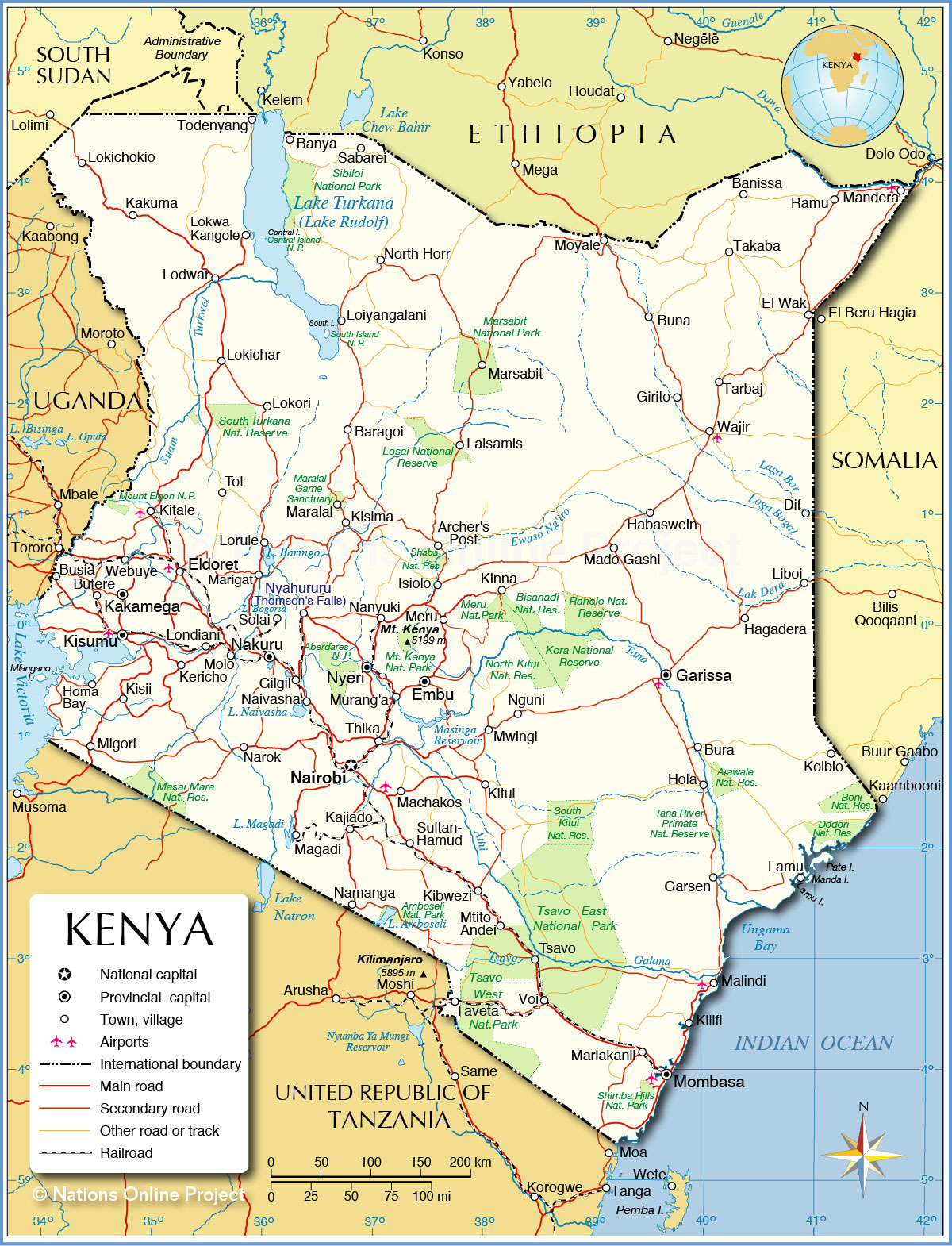
When our eldest son was born, I tried to have his birth registered in England. If I had been successful he could have just applied for the passport today as any English citizen would. Although my husband is English, he wasn't born in England: he was born in Kenya! At the time of his birth in 1960, Kenya was a Protectorate of the UK, which is why he was granted UK citizenship. All children born in Kenya at that time are eligible for UK citizenship themselves, but not all are able to pass eligibility down to their children.  The only way he could pass down his UK citizenship status to our children was if he were a UK citizen "otherwise than by descent," and that pretty much means either a natural-born citizen or someone allowed to qualify as such because of some special exceptions written into the law. The UK did not accept the application to register our son's birth because my husband was not born on UK soil, and thus they concluded he was a citizen "by descent."

But we got lucky and qualified under one of the exceptions. My father-in-law was sent to Kenya by the UK government to work in schools there, so my husband's birth is treated as though he were born in the UK, therefore he actually can pass down his citizenship status. When I originally tried to register our son's birth, I had not known this, but we now have a letter issued by the UK government which states that at the time of my husband's birth his father was in Kenya working for the UK government, so all I need to do is send that letter plus the original birth certificate.

The next obstacle is that I don't have an original birth certificate: all I have is a photocopy. I wanted to see how difficult it is to obtain a Kenyan birth certificate so I went to the central website for civil registration in Kenya. It looked promising –– under the proper district I got a name and email address (info@births.go.ke) and sent a request off to them. Sadly, my email was returned as "unsendable" a few days later. I  also checked the catalog of the Family History Library in SLC, and not surprisingly, they had no civil registration or church records for Kenya. 

Yet I knew that the British have been diligent about registering overseas births for many years, and on the Kenyan Consulate's website I found a very clear explanation of how the whole process works. I was then able to order two copies of his birth certificate (Certificate of Overseas Birth) from the UK General Records Office (GRO). I'm fairly sure they will not look at all like the photocopy of the one issued in Kenya. Once those arrive I can attach them to the forms, send photos, son's birth certificate, my birth certificate, our marriage certificate, and a big fat check to the British Embassy in Washington DC, and he should be good to go!

The funny thing is, my husband is English, but could have applied to become a Kenyan since he was born there. He could become an American too, and may yet. And in addition, since he has a grandparent (three out of four, actually) born in Ireland, he could also apply for Irish citizenship! So he could have four passports if he wanted! He's a simple kind of guy, though, and I suspect he'll stick with just the one.


Enhanced by Zemanta

29 March 2011

The Ancestral Chalybeate Spa

Ann FitzGerald, Priscilla (Barnes) FitzGerald and Polly (FitzGerald) Kimmitt
at the original FitzGerald cottage, Farnes, Kerry, Ireland, June 1989
My people should never have left Ireland. In so doing they deprived the family forevermore of the healing powers of ferruginous water. I know this because of one tiny phrase in a book with a very long title.

Reading contemporaneous accounts of Ireland helps us to envision ancestral townlands as they were before our families left. A mainstay in every Irish researcher's library is Samuel Lewis' A Topographical Dictionary of Ireland, comprising the several counties, cities, boroughs, corporate, market, and post towns, parishes, and villages, with historical and statistical descriptions; embellished with engravings of the arms of the cities, bishopricks, corporate towns, and boroughs; and of the seals of the several municipal corporations: with an Appendix, describing the electoral boundaries of the several boroughs, as defined by the act of the 2d and 3d of William IV, 2 vols., (London: 1837).

County Kerry, Ireland
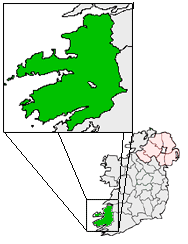
Written about ten years before the Great Famine (1845-1852), it gives the history and lay of the land of every little townland in Ireland. My father (James Patrick/Edmund FitzGerald 1910-1988) always said his father's FitzGerald line were from Castlemaine (Caislean na Mainge) in county Kerry. Castlemaine lies on a harbor at the junction of the Dingle Peninsula and the Ring of Kerry, or just under the first peninsula on the map. It was a market town and the site of a castle built jointly by two Irish chiefs, the Earl of Desmond and MacCarthy More, in order to defend the crossing of the River Maine. Each chief was to alternately protect the castle, but at one point MacCarthy decided he didn't want to give it up. It eventually fell into ruins. Today there is nothing remarkable about the town. A few pubs and bed and breakfast establishments and some fine views are all that distinguish it.

What my father didn't know was the name of the area in which his family had lived: a little part of Castlemaine called Farnes. He and my mother went over to Ireland in 1978 to visit some of his cousins, and I'm quite sure they went to the house his father was born in, below. By asking the local residents, they managed to find the FitzGerald homestead. Compared to the adjacent older cottage, this was quite a step up for the family. I do wonder how accurate our information was, though. I would imagine that my grandfather, Patrick John FitzGerald (1867-1949) was born in the little cottage and thanks to money he and his siblings sent back to Ireland from the US, the family was able to build this once fine edifice.

Ann FitzGerald, Myles Kimmitt, Priscilla FitzGerald
FitzGerald Homestead, Farnes, Kerry, Ireland, June 1989

My mother, sister and I discovered the name when we visited the local parish to view their records in 1989. All of the related FitzGeralds we found lived in Farnes.  Farnes is a townland (more like a village or a neighborhood) in the civil parish of Kilgarrylander, and never gets any press. This is understandable. There isn't much there except gorse-covered hills dotted with the occasional cottage. 


View of the Slieve Mish (Sliabh Mish) range from FitzGerald home,
Farnes, Kerry, Ireland, named after a mythological Celtic princess
who was famed for being cruel.


So there is no historical detail about the actual land my ancestors lived on anywhere, except in one tiny mention in Samuel Lewis' Topographical Dictionary in which he states: "Three miles to the west of the town are the ruins of Castledrum, erected by the sept of Moriarty; and on the lands of Farnass is a good chalybeate spa." What? Peasant farmers living by a spa? Well, this is exciting! Something, at long last to distinguish them from the hordes of peasants the world over. MY ancestors lived near a chalybeate spa. So what is it, then?

The word chalybeate derives originally from the Latin word for steel, "chalybs" which in turn is taken from the Greek "khalups" after those who had invented iron working in Greek mythology. It is simply mineral water that contains iron. Wikipedia has this to say about Chalybeate: "Early in the 17th century, chalybeate water was said to have health-giving properties and many people have promoted its qualities. Dudley North, 3rd Baron North discovered the chalybeate spring at Tunbridge Wells in 1606. Dudley North’s physician claimed that the waters contained ‘vitriol’ and the waters of Tunbridge Wells could cure: the colic, the melancholy, and the vapours; it made the lean fat, the fat lean; it killed flat worms in the belly, loosened the clammy humours of the body, and dried the over-moist brain." It was also said to cure hysteria.

And therein lies the heart of the trouble. By leaving the chalybeatic spa in Farnes (Farnass) my ancestors opened the door to all manner of physiological ills. No wonder some of us are melancholy, some too fat, some too thin. I see it clearly now! This is why my clammy humours are not loosened and my brain remains over-moist. (I do wonder if the roof on the old cottage had anything to do with an abundance of iron in the local water--see first photo.) It is apparent that we must now make an annual trek to the homeland to restore our shattered tissues. I look forward to asking the locals all about it!

Priscilla (Barnes) FitzGerald
Farnes, Kerry, Ireland, June 1989

14 March 2011

One Lovely Blog Award to 15 of My Favorites


Well, I'm honored to have been awarded the One Lovely Blog award from Lisa Swanson Ellam at The Faces of My Family blog! I'm not sure why because lately I've hardly posted much, but I very much appreciate the mention! This is always a great way to get introduced to new bloggers and I've enjoyed reading Lisa's blog. So much good writing out there!!

The rules of acceptance are :

1. Accept the award, post it on your blog together with the name of the person who granted the award and their blog link.

2. Pass the award on to 15 other blogs that you've newly discovered or just love so much.

3. Remember to contact the bloggers to let them know they have been chosen for this award.

Here are the lovely blogs I have selected. Some are new to me, others are like old friends. Please take a minute to browse through them!


Circlemending by Jean Hibben

Cyndi's List by Cyndi Howells

Family Cherished by Valerie

Find My Ancestor Blog by A. C. Ivory

FGS Conference News Blog by Thomas MacEntee

GeneaWebinars also by Thomas MacEntee

Long Lost Relatives.net by Susan Petersen

Marian's Roots and Rambles by Marian Pierre-Louis

NARAtions by John

NERGC 2011 Exploring New Paths to Your Roots also by Marian Pierre-Louis

Paula's Genealogical Eclectica by Paula Stuart-Warren

The Family Recorder by Audrey Collins

Enjoy!

25 February 2011

RootsTech Two Weeks After

RootsTech from a Distance
I want to follow up with some thoughts about RootsTech after two weeks of beating my skull against the wall as to why it unexpectedly blew me away. There's nothing like stepping back to give you a different perspective.

Movement of Information
Massive tree from very close up
As I keep saying, it's not about the gadgets, but more about a slow but massive shift in how information is processed and disseminated. This is on two fronts: first, it marks the beginning of a stronger demarcation between the amateur and professional genealogist. And second, it is the start of a merging between those who use the information (genealogists) and those who connect it to us (software developers). And let me just clarify that it is not actually the start of these shifts, but just my own awareness of them. That's what blew me away. It has been happening and I wasn't looking beyond the trees to see the forest.

The Newbies are Coming, The Newbies are Coming!
We're all in the same boat
Whilst networking I asked a lot of questions about the process of filming the Who Do You Think You Are episodes, and the responses forced me to rethink some of my previous statements. Last year I mistakenly assumed that the actors were acting. I've been told, however, that they were led along during filming in a manner similar to a true research process (if somewhat facilitated). What I now understand is that most of them actually were quite interested in the process itself, and the details along the way, and were just as vulnerable to the genealogy virus as the rest of humankind. What we saw on film was their first reaction to information, not something contrived. They took notes, even if the final edit didn't show them doing so. They may be famous but they are just as vulnerable on the inside as the rest of us. WDYTYA is helping people understand the mystery of their ancestry and the excitement of the hunt, and it's going to create a huge influx of newbies. Newbies, by the way, only consider themselves "beginners" BEFORE they log on to Ancestry. Once they've messed around on the internet for a bit, most of them promote themselves to intermediate. And that's okay, but they need to realize that they will naturally have gaps in the information they have acquired. I'll leave that to the educators in the field to sort out!

What is Good Enough?
Step back to gain perspective
As the interest in genealogy starts to permeate the culture we can see that it is time to make a pronounced break between amateur and professional genealogists. People are attracted to genealogy because they want to know about their families: they don't want to write academic papers! Rather than dread this and fear the fate of standards, we can simplify the process, possibly with the use of well crafted programs like RootsMagic. Amateurs should not have to maintain the same standards as professionals, rather they can work towards professional citations and proof standards on a continuum. Not everyone is going to be able, or even want to produce the same kind of work as a professional. This does not mean that it cannot be valid research. As long as some kind of minimal source citation is given, it may just have to be up to the professional to validate it. There has to be an acceptable lowest common denominator of source citation. This is very freeing because I always feel like the lone defender of citations. I don't harp on proper format with neophytes, but it's always in the back of my mind that someday they will learn to love them. I do try and make everyone see that they will be a lot happier if they manage to jot down where their information is from. Now I can encourage people to just start in, be aware of the where their information is coming from, and trust that in time they will come to understand how helpful it is to have accurate source citations. That's how I learned the lesson: I hadn't noted where I got a certain document, went back to find it, and realized that it existed in many forms and all iterations were not equal. After you spend a day looking for one tiny lost bit of information you finally realize it's worth writing it down when you first find it. And the more you research, the more you feel the repercussions of not doing so. Let's just help everyone understand a simple way to keep track of their research.

I Loves Me a Good Techie!
Extreme nerdiness incarnate
The most critical issue confronting genealogists and technologists at this time is the gedcom standard. I am currently suffering badly from using one genealogy program on one platform and trying to export it, citations and all, to another program on another platform. Citations don't like this method of travel and are rebelling against it. Come to find out (and I sort of knew this, but conveniently forgot), each genie software program makes enhancements to their programs that allow the user to add much useful data. What we users aren't always aware of is where the line between information and exportable information is drawn. Since genealogy is to be disseminated and shared amongst family members and other interested parties, this presents an enormous obstacle. RootsTech gave us an opportunity to open a critical dialogue between genealogists and programmers which will end decades of frustration of people on both sides of the divide. Boundaries will melt away and that will encourage us all to explore new, shared territory, and in the process become more creative.

New genealogists have a world of information to share with us, so let's welcome them with open arms, help them learn effective techniques and teach them to love software developers! Bring on RootsTech 2012 (v. 2.0)!

18 February 2011

Cyndi's List Turns 15 on March 4th, 2011!


Quick, where is the first place you go when confronted with a new locality or time period in your genealogical research? (OK, maybe I gave it away.) Oh sure, you could try Google or Wikipedia, but where can you get at all things genealogical in one fell swoop? Everyone knows it's CyndisList.com. Cyndi will point us to the vital records, county histories, maps, yearbooks, diaries, photos, and ever so much more. That's where you go when you don't know what your're looking for. Really!

It's not easy managing information. Personally, I think it is one of the biggest obstacles to our research in the internet era. We've all been so excited to see records being digitized and uploaded that we often neglect the awesome responsibility of making them accessible in a clean and efficient way. How can you  use them if you can't find them? Thankfully, Cyndi is here to show us the way. I'm just realizing it as I write, but my own bookmarks are arranged in a manner similar to Cyndi's website, on a much smaller scale, bien sûr, but I believe I've been unconsciously modeling after her setup!

Cyndi's List has been online since March 4, 1996! I find this amazing. I remember thinking how young she was at the time. What a remarkable feat! It's probably the oldest bookmark in my browser. In 1996 half of my friends didn't have a clue what the internet even was! Just now I was browsing through the site looking at things I don't usually consult and found her business timeline. It's fascinating to witness how Cyndi took what was originally a 6-page list of websites and turned it into the ultimate genealogist's research finding aid. By 1998 she was being featured in The Wall Street Journal and USA Today, well on her way to giving Cyndi's List a solid footing in the American vernacular. 


And she's still around, more valuable than ever. Every genealogist who uses the web MUST use Cyndi's List. Do you ever question if you've actually checked every single thing available on the web? I do it all the time! And when I get that nagging self-doubt welling up in my bosom, it is Cyndi that either reassures me I have, or leads me to one more resource. If I have a client who wants to help with the research, or learn more, I sent him to Cyndi's List first thing, just to explore. It's amazing how much you can learn there.

Here are a few facts about Cyndi's List by modest Cyndi herself, with my brash comments after them in purple:

Why Donate Money to Cyndi's List?

•   In the beginning there were 1,025 links. Today there are more than 290,000. And who do you think has to keep those 290,000 links current? One person: Cyndi! That is a LOT of links to correct, because we all know how frequently they change. It's a gruelling, Sisyphean task that she cheerily embraces day after day.

•   This site continues to be one of the top research spots online for genealogy. It really is. This isn't hype. It's free, it's super easy to navigate, extremely thorough, up-to-date, and it teaches you as you navigate! Oh, did I mention that it's free?

•   Cyndi's List has always been free for everyone to use. I love how Cyndi is adamant about not charging money for her website. Very noble. But hard to maintain in today's economy, and especially in today's market where genealogy has hit the big time. How has a one-woman show managed to still maintain that top spot for so many years?

•   To date, Cyndi's List has been supported solely by advertisements. And we are so lucky for that. Are you the type that uses shareware until the free trial period is over and drops it? Do you ignore when programmers ask you for a mere $15 in return for using their brilliant piece of software? Well, it's easy to gloss over Cyndi's tiny little donate button, too, but that doesn't mean we shouldn't all just throw something her way now and then. I don't know what I'd do if her site weren't there.

•   This site is in the process of a major upgrade, the first since 1998. Yes! Coming fresh off the first RootsTech ever, I am delighted that Cyndi is looking toward the future! This is great news.

•   Goals for upgrading would include easier use for both the administrator and site visitors, making adding and updating links a quicker process for everyone. Improved navigation and other features are also on the to-do list. Yesssss! More links, more links!

•   Cyndi's List is a one-woman business. Upgrading is very expensive. Your donations would help the site to grow and expand, thus making your searching much easier and more productive. She's so polite! the woman obviously loves what she does, is dedicated and has made our world a better place. 

I appreciate all the support and encouragement users of Cyndi's List continue to give me each day. Thank you! And thank you, Miss Cyndi. You provide us with a great resource!

Happy Birthday, Cyndi's List, and many Happy Returns of the Day! And to the rest of the genealogical community, get on out there and donate! Let's see how much we can raise for the site before the big day!